


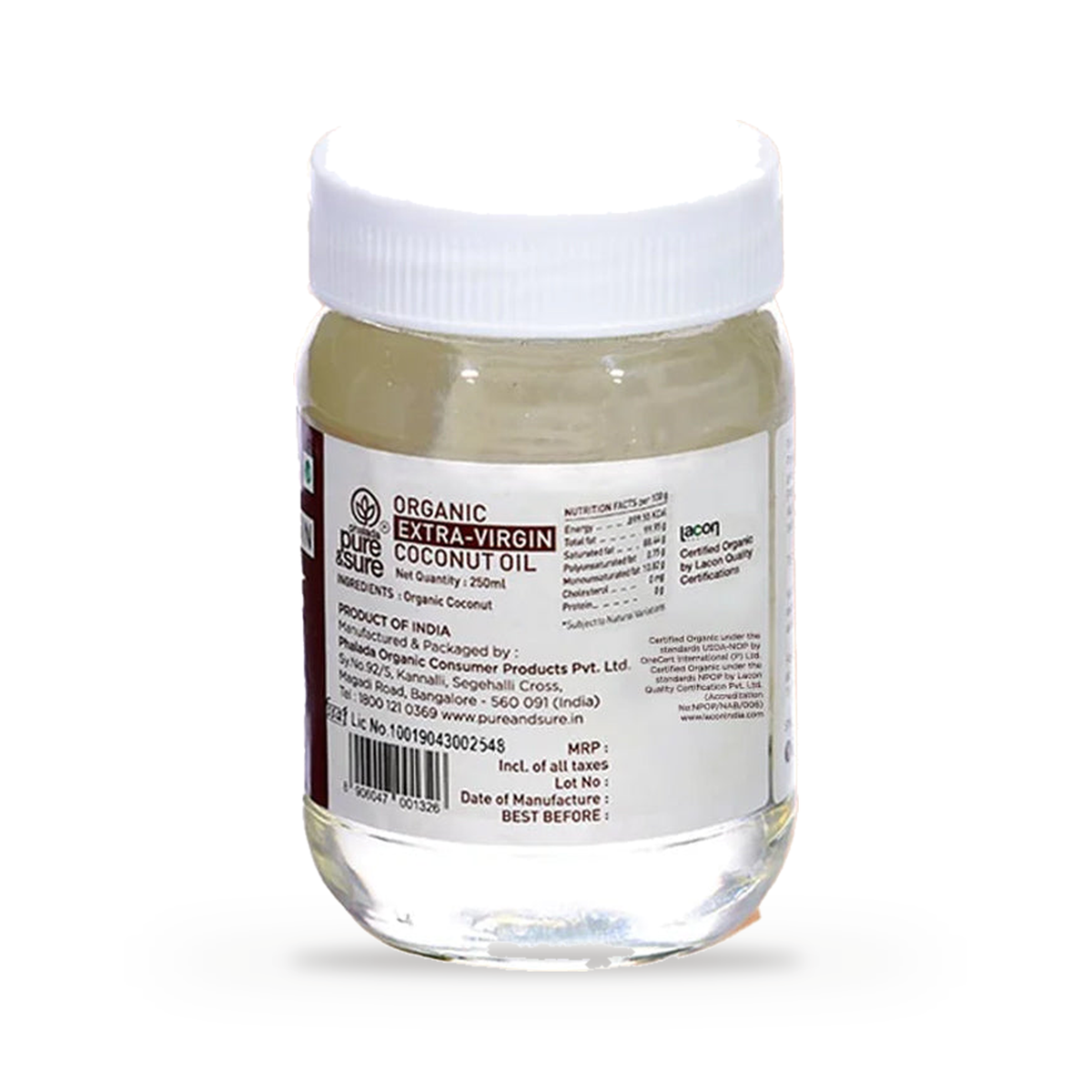
Why We Like It
- Just organic coconut on the ingredient list, with no additives.
- One oil that works in the kitchen and for oil pulling, skin and hair.
- Coconut oil is almost all saturated fat. We would rather say so plainly and suggest you use it in moderation.
Ingredients
Organic coconut
Single ingredientMade from certified organic coconuts. Nothing else is listed on the pack.
Pure & Sure Virgin Coconut Oil versus other coconut oils
| What to compare | Purepicked | Regular coconut oil |
|---|---|---|
| Ingredient list | Organic coconut only | May be refined or blended with other oils |
| Grade | Sold as virgin coconut oil | Often refined, which the label does not have to spell out |
| Additives | None declared | Preservatives and antioxidants are permitted |
| Farming | Certified organic | Often uncertified |
Is It For You?
Good for
Vegetarian and vegan diets
Sautéing, baking and traditional recipes
Oil pulling, skin and hair care
Anyone avoiding refined oils
Avoid if
Coconut allergy
Anyone who wants a neutral-tasting cooking oil, since coconut oil has a distinct aroma
Anyone limiting saturated fat
How to use
Use for everyday sautéing and light stir-frying
Use in baking, smoothies and traditional recipes
Take a spoonful for oil pulling, or use as a base for skin and hair care
It sets solid in cool weather. Warm the bottle gently to melt it
What to look for in Virgin Coconut Oil?
Look for virgin on the pack. Refined coconut oil is often bleached and deodorised, and that is not always declared.
The ingredient list should read as one item: coconut. Blends are legal but dilute what you are paying for.
Virgin oil carries its own coconut smell. A pale, odourless oil has usually been deodorised.
Coconut oil sets solid below about 24°C. That is normal behaviour, not a sign of adulteration.
Buy a size you will finish in a few months. Unrefined oil goes off faster than refined.