


Why We Like It
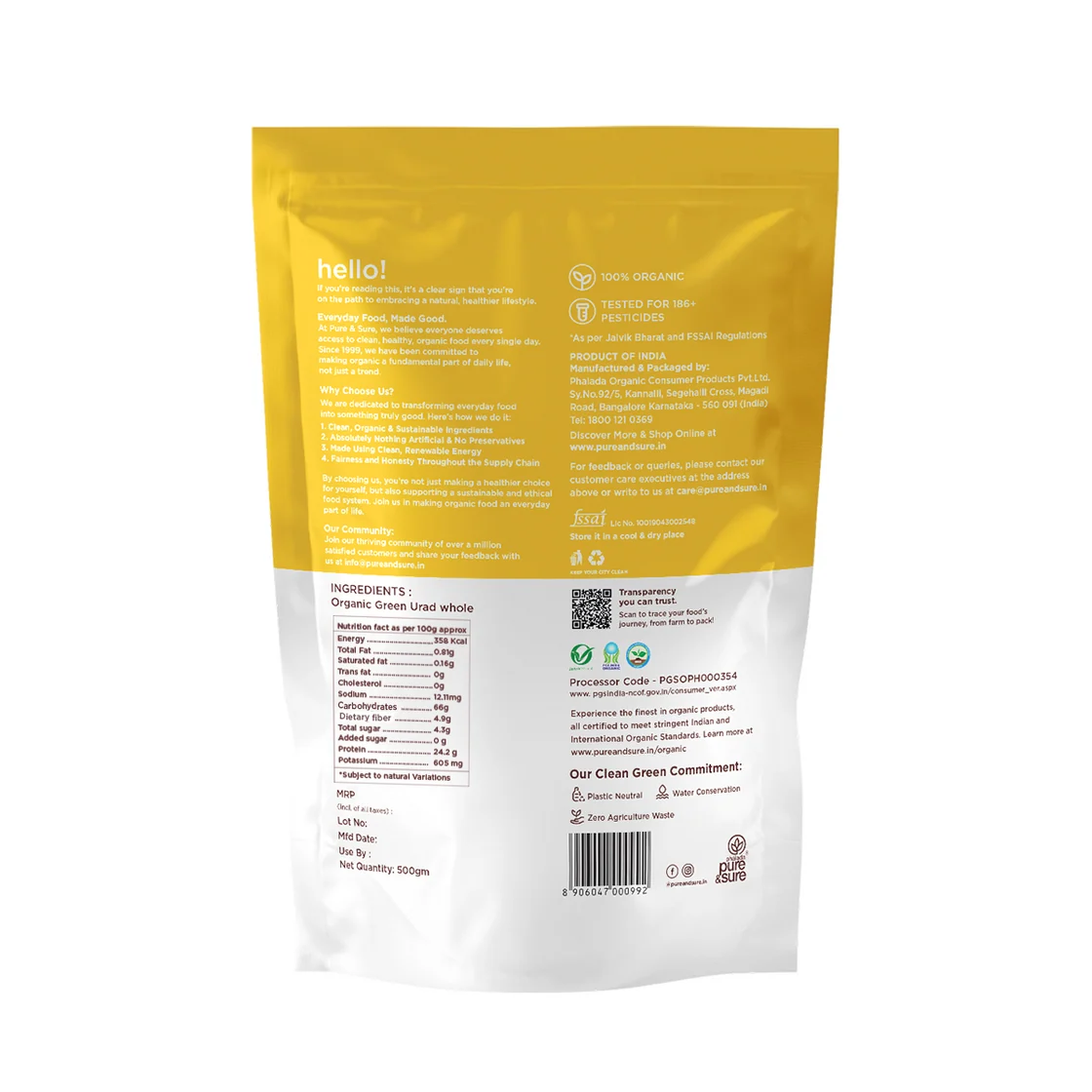
- Skin-on whole urad, unpolished, and a single ingredient.
- The black skin is what darkens dal makhani and gives it body — dehusked white urad behaves completely differently.
- 24.2 g of protein per 100 g.
Ingredients
Organic black urad whole (100%)
Single ingredientWhole black gram with the skin on.
Skin retained
Processing noteThe black skin is what darkens dal makhani and gives it body; dehusked white urad behaves completely differently.
No polish
Not usedUrad is among the most heavily polished pulses in the trade.
No added colour or preservative
Not usedThe colour is the skin's own.
Nutrition factsPer 100g
- Energy kcal
- 358 kcal
- Protein g
- 24.2 g
- Carbohydrate g
- 66 g
- Total sugars g
- 4.3 g
- Added sugars g
- 0 g
- Dietary fibre g
- 4.9 g
- Total fat g
- 0.81 g
- Saturated fat g
- 0.16 g
- Trans fat g
- 0 g
- Cholesterol mg
- 0 mg
- Salt g
- 0.03 g
Pure & Sure Sabut Urad versus other whole urads
| What to compare | Purepicked | Regular black urad |
|---|---|---|
| Ingredient list | Black urad only | Also black urad only; what differs is how the grain is treated, not what is added |
| Polishing | Unpolished | Often oil- or water-polished for gloss |
| Appearance | Matte, slightly uneven | Uniform and glossy |
| Skin | Whole, skin on | Sometimes sold split or part-dehusked |
| Farming | Certified organic, PGS processor code on pack | Conventional, with no certification code to check |
Is It For You?
Good for
Dal makhani, kaali dal and rich gravies
High-protein vegetarian and vegan cooking
Avoid if
Anyone wanting a quick weeknight dal — skin-on whole urad needs an overnight soak and a long cook
Cooks after a pale, light dal — the black skins are what make this dark and heavy
Anyone buying for idli or dosa batter; this is the wrong urad for that, use the dehusked white
How to use
Soak eight hours or overnight; whole skin-on urad needs the full time
Drain, discard the soaking water and cook in fresh water
Pressure-cook twenty-five to thirty minutes after soaking, then simmer to thicken
For dal makhani, finish long and slow with tomato, butter and cream; the body comes from the skins
What to look for in Black Urad?
Polished pulses are buffed with water, oil, talc or soapstone purely for shelf appeal. It strips the outer layer and can leave residue behind. Unpolished dal looks duller, and that is the point.
Uniform colour and high gloss are warning signs in dal, not quality markers.
Metanil yellow is a banned dye used to brighten yellow dals. Rub a few grains between wet palms: dye lifts onto skin and polish leaves a slick. Neither should happen.
Organic certification covers how it was farmed, not whether it was adulterated. They are two different tests.