


Why we picked it
-
 The deep red comes from the Byadagi variety itself rather than from an added colourant.
-
 Aflatoxins came back below the quantification limit and the microbiology panel is clean.
-
 Ground spice is where colour and filler adulteration happens, so a lab panel does real work here.


What to look for in Chilli Powder?
What to look for in Chilli Powder?
- 01Buy whole where you can. Whole spice you can inspect; powder is easy to pad out with starch, husk or chalk.
- 02Rub a pinch between wet palms. Colour that lifts onto skin means added dye. Metanil yellow, lead chromate and Sudan dyes are all documented in Indian spice.
- 03A single-ingredient list is the whole point. Anti-caking agents and 'permitted colour' both signal processing you do not need.
- 04Steam sterilisation is the clean way to reduce microbes. Irradiation and fumigation are not always declared.
- 05Sudan red and brick powder are used to deepen chilli colour. Genuine Byadagi is deep red and wrinkled, not glossy.
What's inside
Dried Byadagi chillies ground into powder; source of the deep red colour and the moderate heat, lab-confirmed at 16,207 SHU.
Two Brothers Byadagi Mirch Powder vs other chilli powders
| What to compare | Purepicked | Regular chilli powder |
|---|---|---|
| Ingredient list | 100% Byadagi Chilli, single ingredient | May be blended with cheaper chilli varieties or fillers |
| Colour source | Natural Byadagi variety pigment (ASTA 98.63, lab-confirmed) | Sudan dye and synthetic colour risk in unbranded chilli powder |
| Aflatoxin testing | Tested — below quantification limit (FARE Labs report) | Rarely tested; chillies are a known aflatoxin risk category |
| Microbiology | Lab-confirmed clean — Salmonella absent, low aerobic count | Rarely tested |
How to use it
- Use as a 1:1 substitute for regular red chilli powder in curries, gravies and tadka
- Add towards the end of tempering to preserve colour and avoid bitterness from overheating
- Store in a cool, dry place away from direct sunlight
Is it for you?
Good for
Everyday curries, gravies and tadka needing colour without excessive heat
Byadagi-style regional cooking (Karnataka cuisine)
Those wanting a single-ingredient chilli powder
Avoid if
Recipes needing very high heat — Byadagi is a moderate-heat variety despite its deep colour
Product details
- Sold by
- Purepicked
- Brand
- Two Brothers India Farms
- Net quantity
- 150 g
- Type
- Ground Spices
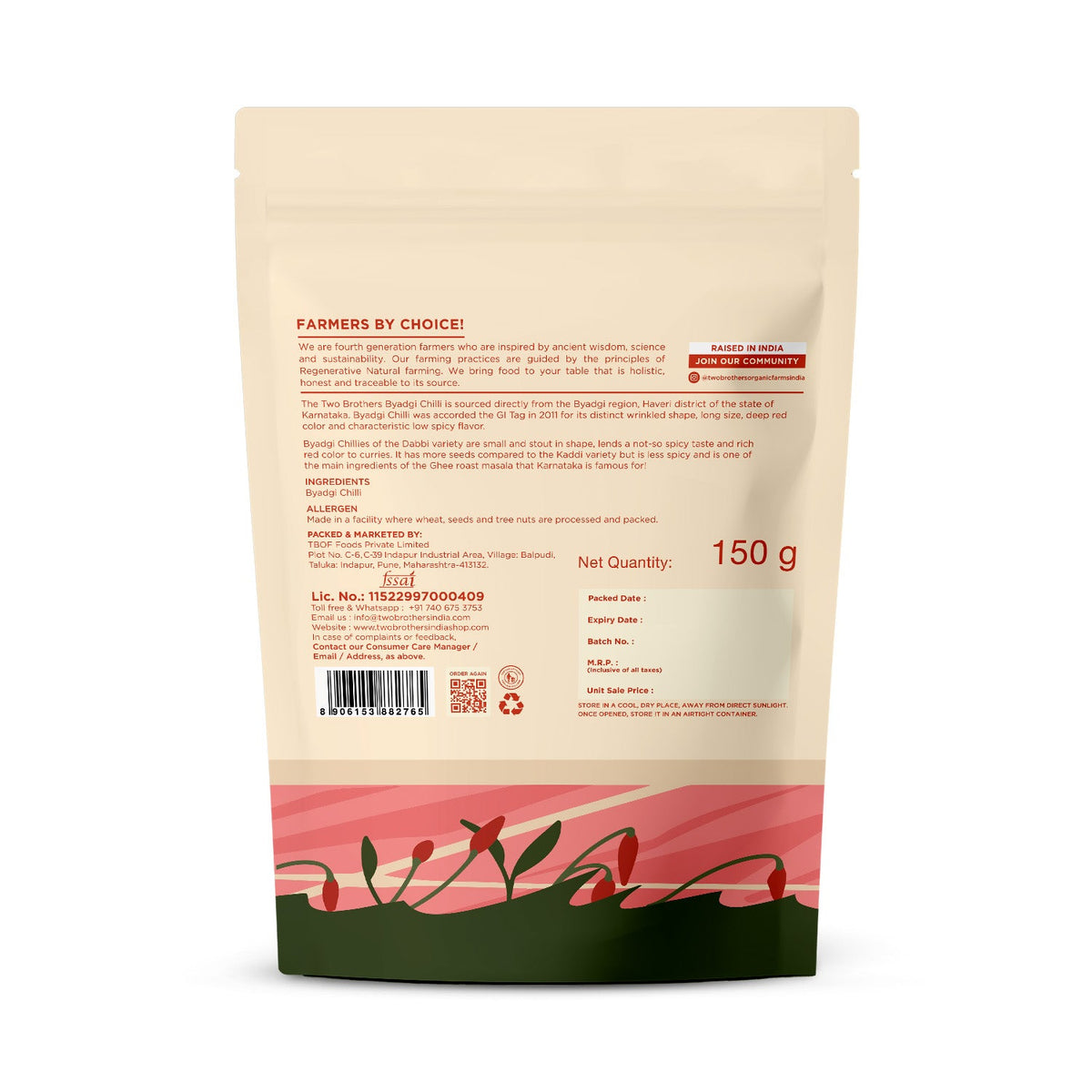
Also on the label
Questions people ask
How hot is Byadagi chilli powder?
Byadagi is sold as a colour chilli, but this powder is moderate rather than mild. Skip it for recipes that need very high heat.
How do I use it?
Swap it 1:1 for regular red chilli powder in curries, gravies and tadka. Add it towards the end of tempering so it keeps its colour and doesn't turn bitter.
How should I store it?
In a cool, dry place away from direct sunlight.
Still unsure? Ask us on WhatsApp