


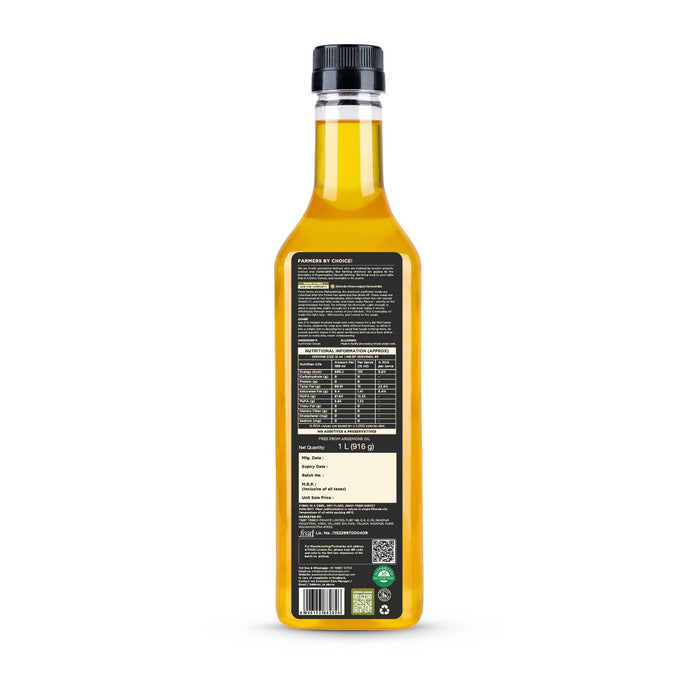
Why We Like It
- Cold-pressed and single-filtered, so it keeps sunflower's natural colour and aroma.
- Unrefined: not bleached or deodorised after pressing.
- Sediment at the base is a sign of light filtering, not a defect.
Ingredients
Sunflower Oil
CleanCold-pressed and mechanically extracted, as declared by the brand.
Nutrition factsPer 100g
- Energy kcal
- 899.2 kcal
- Protein g
- 0 g
- Carbohydrate g
- 0 g
- Total sugars g
- —
- Added sugars g
- —
- Dietary fibre g
- 0 g
- Total fat g
- 99.91 g
- Saturated fat g
- 9.4 g
- Trans fat g
- 0 g
- Cholesterol mg
- 0 mg
- Salt g
- 0 g
Two Brothers Cold-Pressed Sunflower Oil versus other sunflower oils
| What to compare | Purepicked | Regular sunflower oil |
|---|---|---|
| Extraction method | Cold-pressed, mechanically expelled | Usually solvent (hexane) extracted |
| Refining | Unrefined, natural colour and aroma retained | Refined, bleached, deodorised (RBD) |
Is It For You?
Good for
Everyday cooking, sautéing and frying
Those wanting an unrefined, minimally processed oil
Avoid if
Anyone wanting a neutral, odourless cooking oil (sunflower has a natural aroma)
Repeated reuse of the same oil for frying
How to use
Use for everyday cooking, sautéing and finishing where a natural sunflower flavour is welcome
Store in a cool, dark place, tightly sealed
Shake gently before use — natural sediment may settle since the oil is unrefined
Discard once the oil darkens or foams after repeated frying
What to look for in Cooking Oil?
Look for cold-pressed, wood-pressed or ghani on the pack. Refined oils are usually hexane-extracted, and that step is never declared.
The ingredient list should read as one oil. Blends are legal but dilute what you are paying for.
Unrefined oil carries its own colour and smell. A pale, odourless oil has been bleached and deodorised.
Buy a size you will finish in a few months. Unrefined oil oxidises faster than refined.