


Why we picked it
-
 The garlic goes in two ways — roasted for sweetness, fresh and minced for bite — never as a powder.
-
 San Marzano leads the tomatoes, with Roma added for acidity because San Marzano alone runs sweet.
-
 Nothing on the ingredient list is a preservative, colour or thickener — every line on it is a food.
-
 Cold-pressed extra virgin olive oil does the cooking, not a cheaper refined or blended oil.
-
 The lab results back up the label: no added sugar, no trans fat.


What to look for in Pasta Sauce?
What to look for in Pasta Sauce?
- 01Tomato should lead the ingredient list. If water or paste comes first, the sauce has been built back up rather than cooked down.
- 02Added sugar is common in jarred sauce to cover acidity. A sauce made from good tomatoes does not need it.
- 03Sodium benzoate and potassium sorbate are the usual preservatives. Properly processed and sealed sauce can do without them.
- 04Herbs and aromatics should appear by name. 'Nature-identical flavouring' is there to make up for weaker tomato.
What's inside
Whole peeled, packed in their own juice. The majority of what is in the jar.
Whole peeled. Added because San Marzano on its own is too sweet to carry the sauce.
Concentrated tomato and nothing else. It thickens the sauce, so no starch or gum has to.
The cooking fat, rather than a cheaper refined or blended oil.
Some roasted first for mellow sweetness, some minced fresh for bite. Never a powder or a flavouring.
Seasoning only. Nothing in the jar is doing preservative work.
Seasoning. Ground pepper, not an extract or an oleoresin.
Real juice, used to adjust acidity rather than an acidity regulator.
Brings the sauce to the right thickness as it cooks down.
Pomoro Roasted Garlic & Tomato vs other pasta sauces
| What to compare | Purepicked | Other pasta sauces |
|---|---|---|
| Tomatoes | San Marzano led, with Roma added for acidity | Often unnamed 'tomatoes', or paste alone |
| Garlic | Roasted and fresh minced, both real cloves | Often garlic powder or flavouring |
| Added sugar | None | Commonly added to soften the acidity |
| Preservatives | None | Usually one or more |
| Oil | Cold-pressed extra virgin olive oil | Often a cheaper refined or blended oil |
| Fibre | 3.61 g per 100 g, the highest of the three Pomoro sauces | Varies by recipe |
Nutrition facts · per 100 g
- Energy
- 73.3 kcal
- Protein
- 1.68 g
- Carbohydrate
- 10.60 g
- Total sugars
- 6.20 g
- Added sugars
- <0.5 g
- Dietary fibre
- 3.61 g
- Total fat
- 2.68 g
- Saturated fat
- 0.55 g
- Trans fat
- <0.1 g
- Salt
- 0.48 g
How to use it
- Stir through hot pasta straight from the jar
- Spread over a pizza base and let the roasted garlic do the work
- Crack eggs into a panful and bake it
- Toss through roasted vegetables while they are still hot
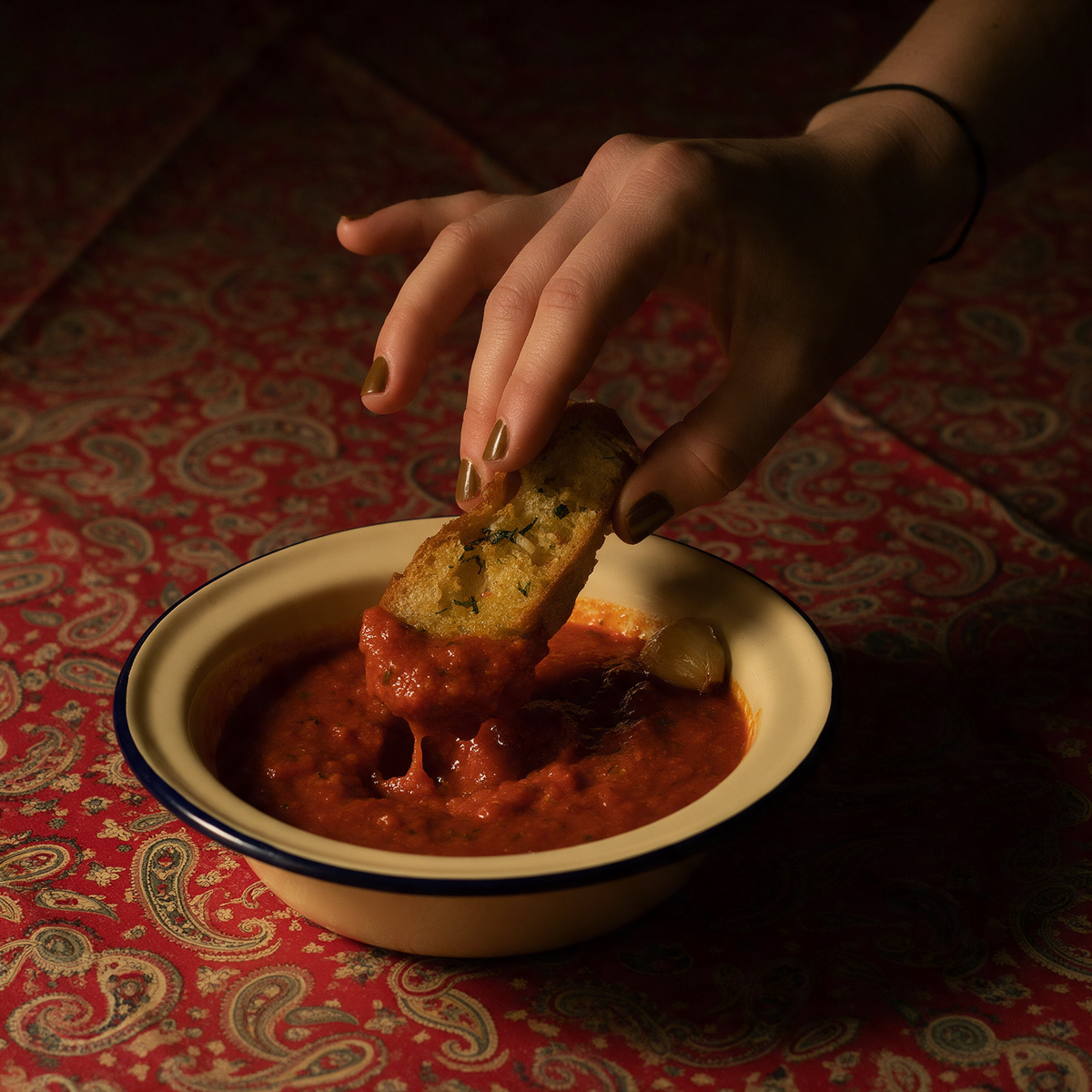
- Warm a bowl of it and dip garlic bread straight in
Is it for you?
Good for
Pasta, pizza bases and baked egg dishes
Anyone avoiding added sugar in packaged sauces
Simmered or slow-cooked recipes
Cooking from a shelf-stable pantry staple
Avoid if
Thin, pourable sauces — this one is thick and paste-like
Anyone avoiding garlic
Product details
- Sold by
- Purepicked
- Brand
- Pomoro
- Net quantity
- 390 g
- Type
- Sauces
Also on the label
Questions people ask
How is the garlic used?
Two ways: some roasted first for a mellow sweetness, some minced fresh for bite. Never a powder or a flavouring.
Does it have added sugar?
No. It is lab tested, and the results confirm no added sugar and no trans fat.
How is it different from the other Pomoro sauces?
It has the most fibre of the three Pomoro sauces, at 3.61 g per 100 g, and its character comes from garlic used two ways: some roasted for sweetness, some minced fresh for bite.
What can I use it for?
Pasta straight from the jar, pizza bases, baked eggs, tossing through hot roasted vegetables, or as a dip for garlic bread.
Who should skip it?
Anyone avoiding garlic, and anyone who wants a thin, pourable sauce. This one is thick and paste-like.
Still unsure? Ask us on WhatsApp