


Why we picked it
-
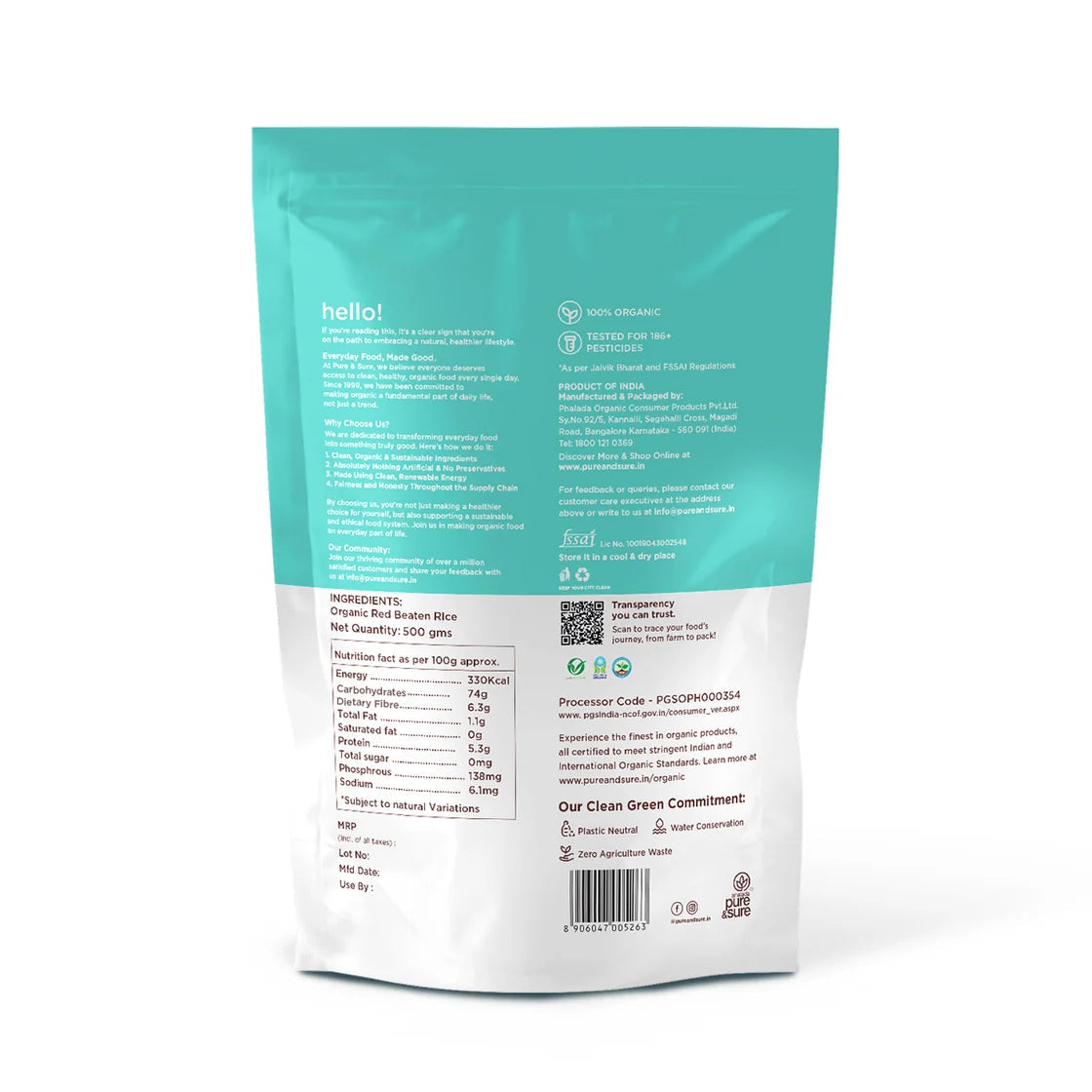
 The bran is still on, the fibre figure on the panel backs it up, and there is one ingredient behind it.
-
 The red colour is the bran layer left on rather than milled away.
-
 6.3 g of fibre per 100 g.


What to look for in Red Poha?
What to look for in Red Poha?
- 01Poha is flattened rice, so everything true of rice applies: the whiter it is, the more bran was polished away.
- 02Red poha keeps its bran; white poha does not. Colour here is information, not decoration.
- 03Some poha is bleached to look whiter and more uniform. Natural poha varies slightly flake to flake.
- 04Poha picks up odours and moisture quickly. Buy sealed packs rather than loose, and finish them reasonably fast.
What's inside
Red rice flattened into flakes, with nothing added.
The red colour is the bran layer, left on rather than milled away; it is where the fibre and the nuttiness come from.
The practices that would strip exactly the layer this product is sold for.
None declared; the colour is the grain's own.
Brand states the flakes are steam-sterilised for microbial safety rather than chemically treated.
Pure & Sure Red Poha vs other pohas
| What to compare | Purepicked | Regular white poha |
|---|---|---|
| Grain | Red rice with the bran left on | White rice, bran milled away |
| Colour | The grain's own bran colour | Whitened; bleaching is used on dull flakes and never appears on a label |
| Treatment | Steam-sterilised | Method rarely stated |
| Texture | Firmer, holds its shape | Softer, collapses more easily |
Nutrition facts · per 100 g
- Energy
- 330 kcal
- Protein
- 5.3 g
- Carbohydrate
- 74 g
- Total sugars
- 0 g
- Added sugars
- Not declared
- Dietary fibre
- 6.3 g
- Total fat
- 1.1 g
- Saturated fat
- 0 g
- Trans fat
- Not declared
- Cholesterol
- Not declared
- Salt
- 0.02 g
How to use it
- Rinse in a colander under running water for thirty to forty seconds, a little longer than white poha
- Rest five to ten minutes to let the flakes swell; do not soak in standing water
- Temper mustard seeds, curry leaves and onion, then fold the flakes through on low heat
- For chivda, dry-roast until crisp before adding nuts and seasoning
Is it for you?
Good for
Aval upma, poha upma and quick breakfasts
Chivda and roasted snack mixes
High-fibre everyday eating
Avoid if
Anyone expecting white poha's softness — red poha stays firmer and takes longer to soften
Cooks who want the flakes to disappear into the dish; the bran keeps them distinct and nutty
Buyers expecting a pale, uniform flake — the red is the bran and it varies by batch
Product details
- Sold by
- Purepicked
- Brand
- Pure & Sure
- Net quantity
- 500 g
- Type
- Poha & Flakes
Also on the label
Questions people ask
Why is this poha red?
The red is the bran layer of the rice, left on rather than milled away. That layer carries the fibre and the faint nuttiness. The colour varies a little by batch.
How do I prepare it?
Rinse in a colander under running water for thirty to forty seconds, a little longer than white poha, then rest five to ten minutes to swell. Don't soak it in standing water.
How is it different from white poha?
It is firmer, takes a little longer to soften and holds its shape in the pan, so upma stays separate rather than turning to paste. It has 6.3 g of fibre per 100 g.
What's in the pack?
One ingredient: organic red beaten rice. The brand states no bleaching or chemical polishing, no added colour or preservative, and that the flakes are steam-sterilised.
How should I store it?
Poha picks up odours and moisture quickly, so keep the pack sealed and finish it reasonably fast.
Still unsure? Ask us on WhatsApp