


Why We Like It
- Certified organic finger millet from Karnataka's traditional millet belts, stone-ground.
- Wholegrain by nature — ragi is not refined the way wheat is, so nothing has been stripped.
- Sometimes cut with rice or wheat flour in the trade; a single-ingredient label rules that out.
Ingredients
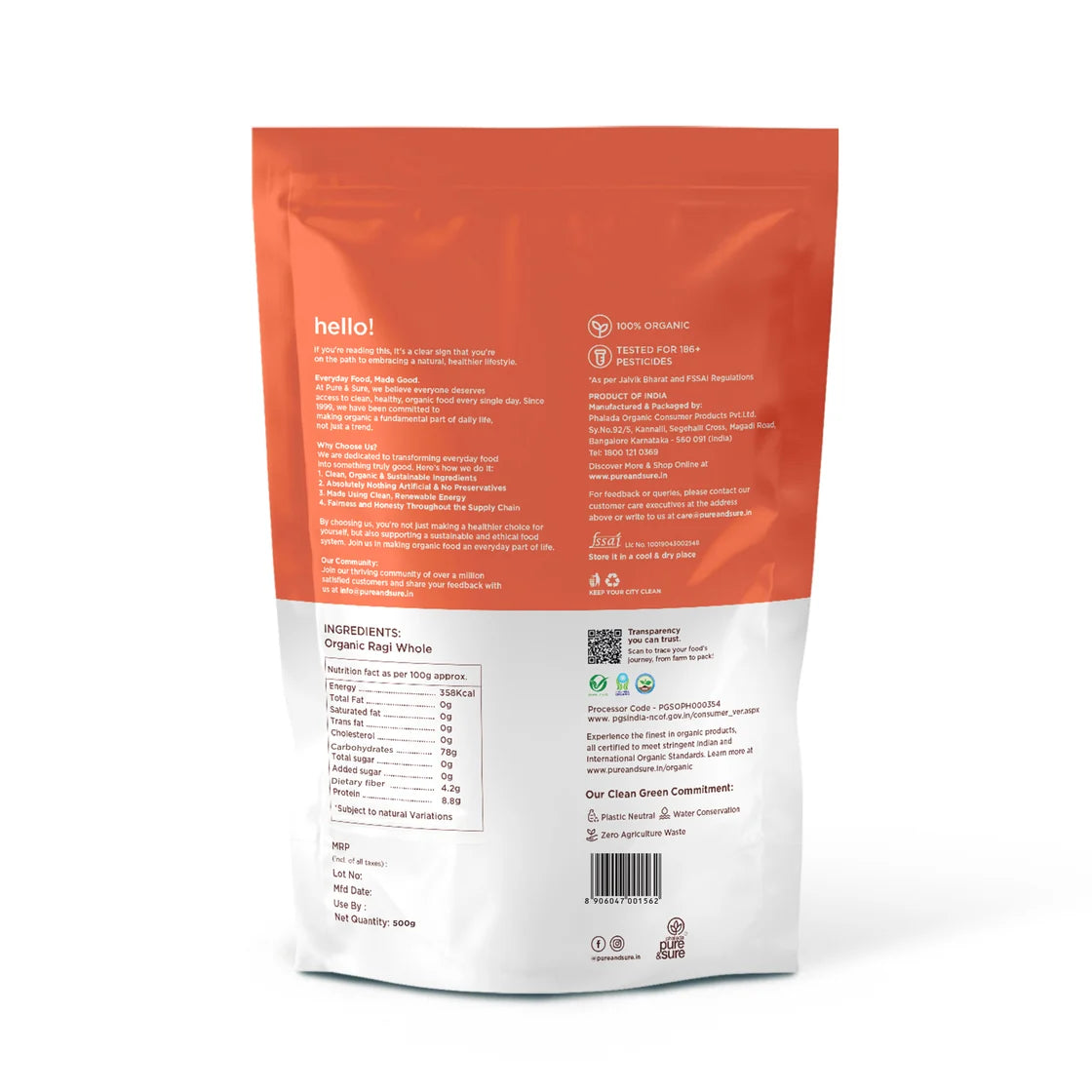
Organic ragi (100%)
Single ingredientFinger millet ground to flour, nothing added. Note the pack's ingredient line reads 'Ragi Whole' although the product is a flour.
Wholegrain by nature
NoteRagi grains are too small to strip the bran from, so ragi flour is wholegrain whether or not a pack says so. Unlike wheat, there is no refined version to compare it against.
No added colour or anti-caking agent
None declaredRagi flour is naturally dull reddish-brown and does not need help.
No blended flour
No wheat, rice or maize flour declaredRagi is sometimes cut with cheaper flours, which is invisible once ground.
Nutrition factsPer 100g
- Energy kcal
- 358 kcal
- Protein g
- 8.8 g
- Carbohydrate g
- 78 g
- Total sugars g
- 0 g
- Added sugars g
- 0 g
- Dietary fibre g
- 4.2 g
- Total fat g
- 0 g
- Saturated fat g
- 0 g
- Trans fat g
- 0 g
- Cholesterol mg
- 0 mg
- Salt g
- Not declared
Pure & Sure Ragi Flour versus other ragi flours
| What to compare | Purepicked | Regular ragi flour |
|---|---|---|
| Ingredient list | Ragi only | Sometimes cut with rice or wheat flour |
| Grain | Wholegrain by nature | Same, but freshness varies widely |
| Colour | Dull reddish-brown | Same; unusually pale can mean blending |
| Farming | Certified organic, PGS processor code on pack | Conventional; residues not published |
Is It For You?
Good for
Ragi mudde, roti and dosa
Baking blends where a wholegrain flour is wanted
Porridge and ambali
First foods and simple home cooking
Avoid if
Anyone expecting ragi roti to behave like wheat roti — there is no gluten, so the dough will not stretch
Cooks who want a light, pale flour; ragi is dense and reddish-brown by nature
Anyone using it alone in baking — it needs blending with other flours for anything raised
How to use
For mudde, cook with boiling water and stir hard; ragi needs heat to come together
For roti, knead with hot water rather than cold, and rest the dough before rolling
Mix with rice flour or besan in dosa batter for a more forgiving texture
Cook into porridge with milk or water; a small amount thickens a lot
What to look for in Ragi Flour?
Maida is the cheapest filler in any atta. If it appears on the ingredient list at all, part of what you are paying for is refined flour.
Stone-ground (chakki) flour keeps the germ and bran. Roller-milled flour usually does not. The pack should say which.
Unbleached flour is off-white and slightly uneven. A bright, uniform white usually means bleaching or heavy refining.
Whole flours go rancid faster because the germ is still in there. Buy a size you will finish in a couple of months.