


Why We Like It
- One ingredient in the jar, and organic certification behind the beekeeping.
- Raw rather than heated and filtered clear, so the pollen stays in.
- It crystallises and clouds over the months, which is what raw honey does.
- Glass jar, so nothing leaches in from a plastic or metal lining.
Ingredients
Organic honey (100%)
Single ingredientHoney and nothing else, which is the entire question in this category.
No added colour or preservative
Not usedHoney needs neither.
Raw and unprocessed
Not heated clearRaw honey crystallises and clouds over time, which is normal behaviour rather than a defect.
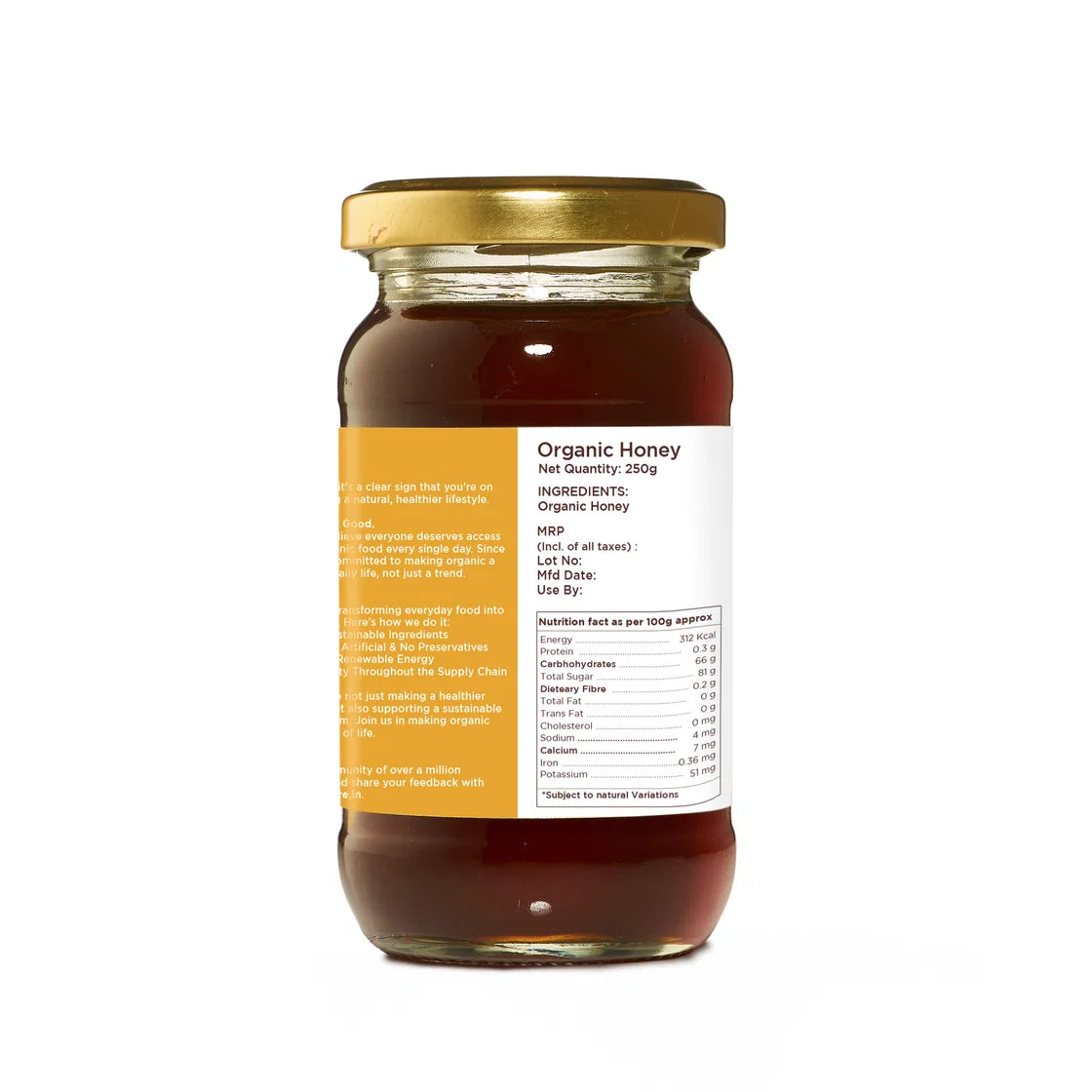
Nutrition factsPer 100g
- Energy kcal
- 312 kcal
- Protein g
- 0.3 g
- Carbohydrate g
- 66 g
- Total sugars g
- 81 g
- Added sugars g
- —
- Dietary fibre g
- 0.2 g
- Total fat g
- 0 g
- Saturated fat g
- —
- Trans fat g
- 0 g
- Cholesterol mg
- 0 mg
- Salt g
- 0.01 g
Pure & Sure Organic Honey versus other honeys
| What to compare | Purepicked | Regular honey |
|---|---|---|
| Processing | Raw, not heated clear | Often heated and filtered clear |
| Crystallisation | Expected, and a sign of raw honey | Prevented by heating |
| Farming | Certified organic beekeeping | Conventional, and not traceable to an apiary |
| Additives | None | Flavour or colour added in some honeys |
Is It For You?
Good for
Sweetening tea, coffee and warm drinks
Traditional home remedies
Dressings, marinades and glazes
Drizzling over yoghurt, porridge and fruit
Avoid if
Infants under one year, who should never be given honey
Buyers who want honey to stay clear and runny — raw honey crystallises and clouds, which is normal
Anyone treating honey as a low-sugar sweetener; it is sugar by another name
How to use
Use a dry spoon every time; moisture in the jar encourages fermentation
If it crystallises, stand the jar in warm water and stir until it loosens
Do not microwave or boil it; high heat destroys what makes raw honey worth buying
Add to tea once it has cooled slightly rather than to boiling water
What to look for in Honey?
Sugar syrup adulteration is the central problem in honey. Rice and corn syrup are not detectable by taste, and the water-drop test does not work.
Moisture matters. Above roughly 20% honey ferments. Genuine low-moisture honey is thick and slow to pour.
Crystallisation is normal and varies by floral source. It is not a sign of sugar and not a sign of spoilage.
Raw, unfiltered honey keeps its pollen. Heavy filtering and heating make honey clear and pretty while stripping that away.
A C4 sugar isotope test is the check that catches syrup adulteration. An organic certificate covers the beekeeping, not the syrup.