


Why We Like It
- Sourced organically and roasted slowly to keep the natural oils and aroma.
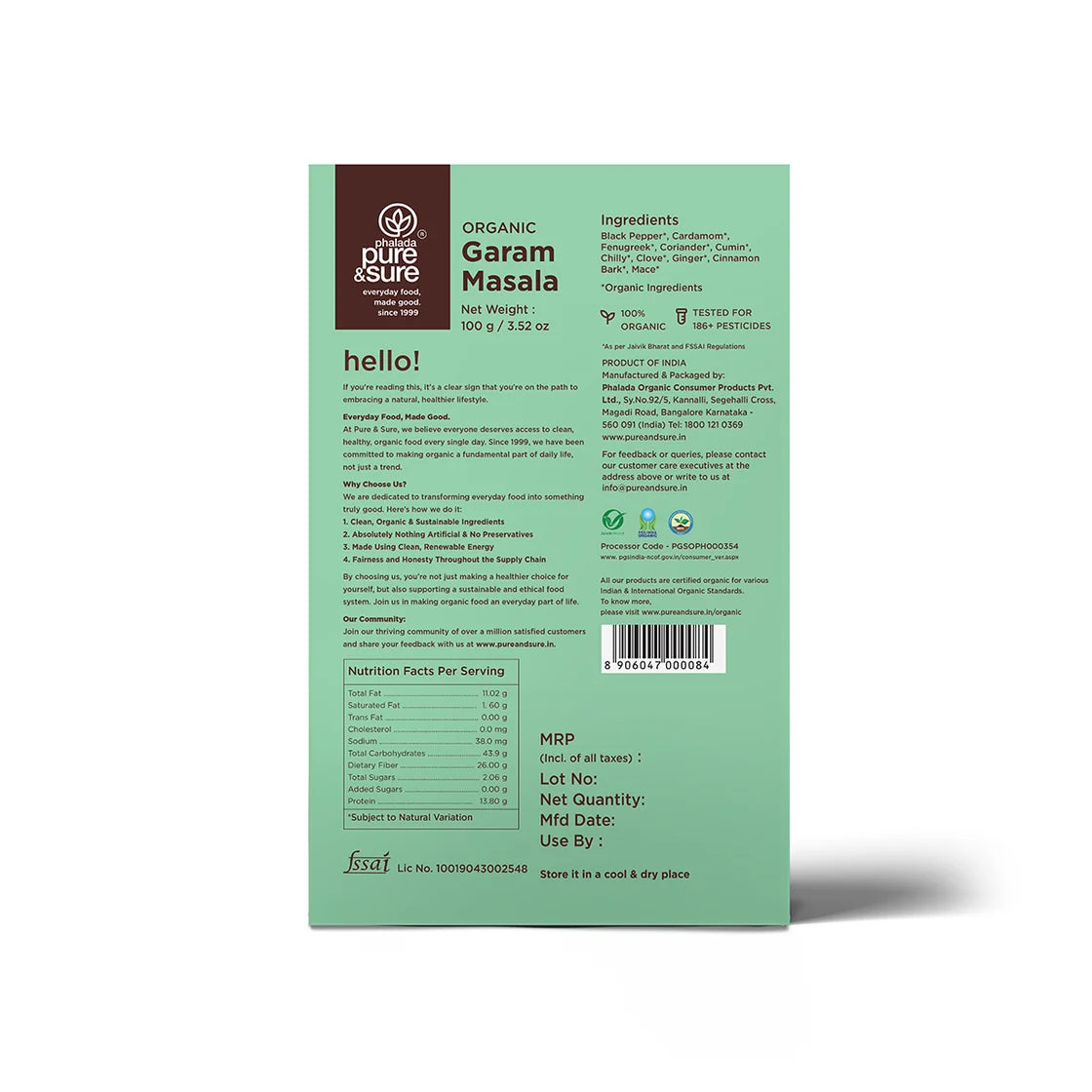
- Ten spices, every one named, with no salt, no filler and no anti-caking agent.
- Pepper and cardamom lead the list rather than the cheaper coriander or cumin most blends open with.
Ingredients
Organic black pepper
First on the list, which makes this a pepper-led garam masalaThe traditional structure, and a more expensive one than cumin- or coriander-led blends.
Organic cardamom
Second by weightCardamom is the costliest spice in the blend, and its position here is a genuine quality signal.
Organic fenugreek
NoteAdds the slightly bitter, savoury backnote. Not in every garam masala.
Organic coriander and cumin
NoteThe rounding spices, carrying the sharper ones. In cheaper blends these lead the list because they cost least.
Organic chilli, clove, ginger
NoteHeat and warmth, from whole spices rather than a seasoning premix.
Organic cinnamon bark and mace
NoteMace is the other expensive inclusion here. No species on file for the cinnamon bark, the same gap as on the brand's standalone cinnamon.
No salt
Unusual and worth knowingMany masala blends are part salt by weight, so you season separately and control it.
No filler, anti-caking agent or colour
Not usedNo starch, no rice flour, no silicon dioxide (INS 551), no added colour and no flavour enhancer.
Pure & Sure Garam Masala versus other garam masalas
| What to compare | Purepicked | Regular garam masala |
|---|---|---|
| Ingredient list | Ten spices, nothing else | Often salt, starch and anti-caking agents too |
| Spice order | Pepper and cardamom lead | Coriander or cumin lead; cheaper to make |
| Salt | None added | Frequently a major ingredient by weight |
| Colour | From the spices themselves | Synthetic colours are documented in masala |
| Flavour enhancer | None | MSG (INS 621) common |
Is It For You?
Good for
Finishing curries, dals and biryani
Anyone controlling their own salt
Households avoiding anti-caking agents and MSG
North Indian gravies and kebabs
Avoid if
Anyone who wants a pre-salted blend they can spoon in without adjusting — there is no salt in this
Cooks who add garam masala early; it is a finishing spice and long heat flattens it
Anyone expecting a mild blend — this is pepper-led and stronger spoon for spoon than salted supermarket versions
How to use
Add in the last few minutes of cooking. Garam masala is a finishing spice and long heat flattens it
Start with less than you think; unsalted blends taste stronger spoon for spoon
Sprinkle over dals, curries and biryani just before serving
Mix into marinades for kebabs and tikkas, where it has time to work on the meat rather than in the pan
What to look for in Garam Masala?
Read the order of the ingredient list. Salt or starch high up means you are buying filler priced as masala.
Count the spices. A blend naming ten spices is telling you more than one naming 'spices and condiments'.
Anti-caking agents keep blends free-flowing. A blend without them may clump in humidity, which is the honest trade.
'Permitted colour' and 'nature-identical flavouring' are legal, but they exist to compensate for weaker spice.