


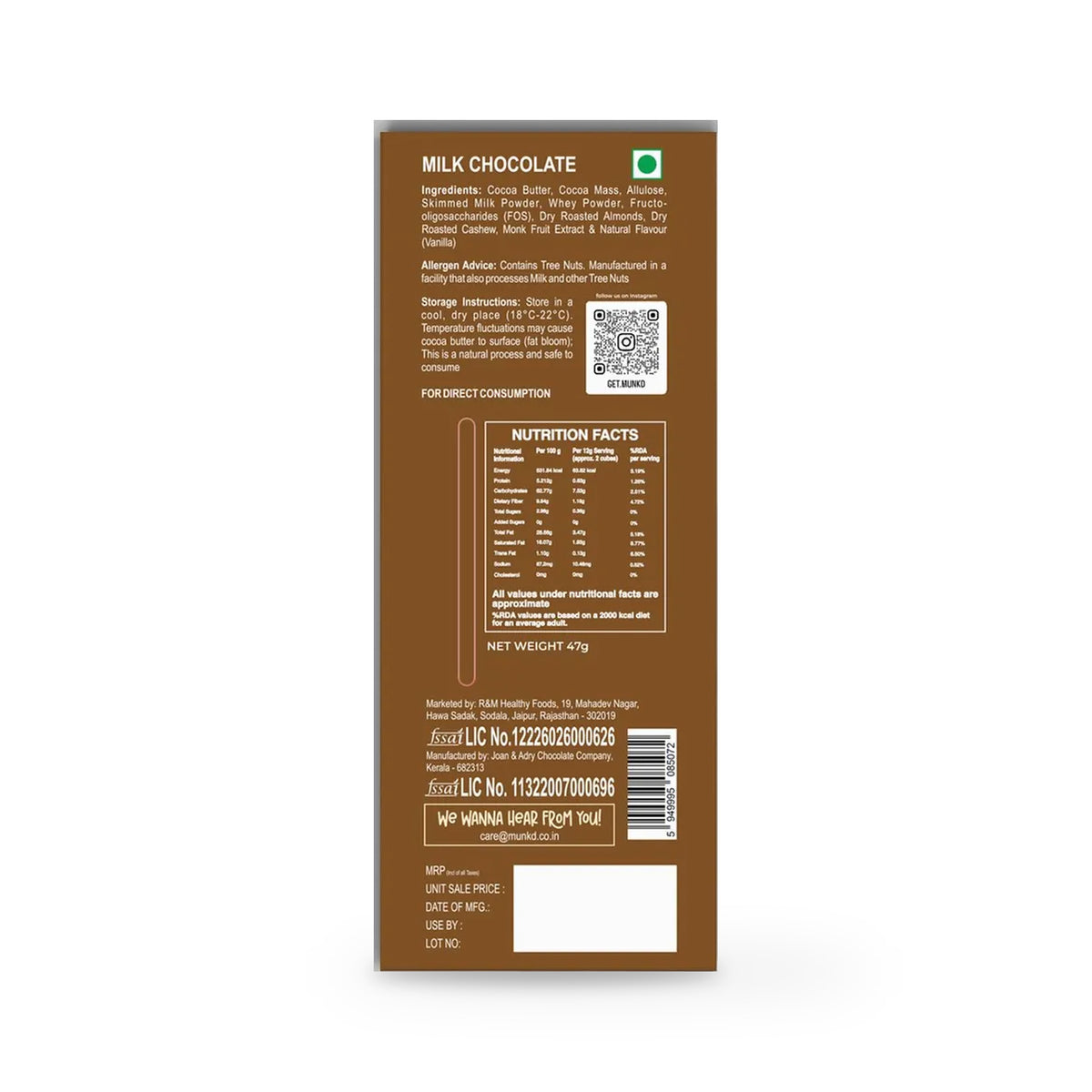
Why We Like It
- No emulsifier and no vegetable fat on the ingredient list. It is cocoa butter and cocoa mass with milk and nuts.
- A creamy milk bar without refined sugar, which is hard to find.
- Almond and cashew give it crunch and a slightly savoury finish.
- It is still a treat. We would rather say that than sell it as a health food.
Ingredients
Cocoa butter
FatThe natural fat of the cocoa bean. It is what makes this real chocolate rather than compound chocolate made with palm or hydrogenated fat.
Cocoa mass
BaseGround roasted cocoa beans. The brand says its cocoa comes from farms in Idukki, Kerala. We have not verified the origin.
Allulose
SweetenerA rare sugar found in small amounts in figs and raisins. It tastes close to sugar, but the body uses very little of it for energy. Larger amounts can upset the stomach.
Skimmed milk powder
DairyDried milk with the fat taken out. It contains milk protein and lactose.
Whey powder
DairyThe watery part of milk left over from cheese making, dried. It contains milk.
Fructo-oligosaccharides (FOS)
Added fibreA prebiotic fibre that gut bacteria feed on. Too much can cause gas or loose stools.
Dry-roasted almond
InclusionA tree nut. Adds crunch.
Dry-roasted cashew
InclusionA tree nut. Adds crunch and a soft, buttery taste.
Monk fruit extract
SweetenerA plant sweetener from the luo han guo fruit. It is many times sweeter than sugar, so only a little is used.
Natural flavour (vanilla)
FlavourVanilla flavour, declared as natural on the pack.
Munk'd Milk Chocolate versus other milk chocolates
| What to compare | Purepicked | Regular milk chocolate |
|---|---|---|
| Sweetener | Monk fruit extract and allulose | Refined white sugar |
| Fat used | Cocoa butter only | Often palm or hydrogenated vegetable fat, sold as compound chocolate |
| Emulsifier | None listed | Soy lecithin (INS 322), often with PGPR (INS 476) |
| Added fibre | Yes, FOS (prebiotic fibre) | None |
| Flavouring | Natural vanilla flavour | Vanillin (synthetic vanilla) is common |
Is It For You?
Good for
Milk chocolate eaters who want a bar without refined sugar
Anyone avoiding vegetable fat and emulsifiers
People who like nuts in their chocolate
Avoid if
Anyone with a milk allergy, lactose intolerance, or on a dairy-free or vegan diet
Anyone with a tree-nut allergy
Anyone who gets bloated by prebiotic fibres or rare sugars
How to use
Store in a cool, dry place, between 18 and 22°C
A pale film on the surface (fat bloom) is natural and safe to eat
Break into squares and let it sit at room temperature for a minute before eating
Good with a cup of chai or as an after-dinner square
What to look for in Chocolate?
Check the fat. Real chocolate is set with cocoa butter. If the label says vegetable fat, palm oil or hydrogenated fat, FSSAI requires it to be called compound chocolate, not chocolate.
Read the ingredient order. If sugar comes before cacao, it is a sugar bar with cocoa in it, whatever the percentage on the front says.
Look for PGPR (INS 476). It is added to cut the amount of cocoa butter a bar needs, and it is a sign the recipe is being made cheaper.
Check the emulsifier. Soy lecithin (INS 322) is the default; sunflower lecithin is the cleaner swap and matters if you avoid soy.
Vanillin is synthetic vanilla flavour. Good chocolate does not need it, and its presence usually means the cacao underneath is thin.
A bar labelled dark can still contain milk solids. If you are dairy-free, read the list rather than trusting the word dark.
Cocoa processed with alkali (dutched) is easier on the palate but strips much of the flavanol content. Unalkalised cacao keeps it.
Sugar-free bars are usually sweetened with maltitol or sorbitol. They are legal, but they are sugar alcohols and can unsettle a stomach in quantity.