


Why We Like It
- We like that these look like actual chickpeas — matte, a little mismatched in size, no bleached-out uniformity.
- Uniformly pale, bright chickpeas usually owe that look to sulphur whitening; these have the duller, uneven colour instead.
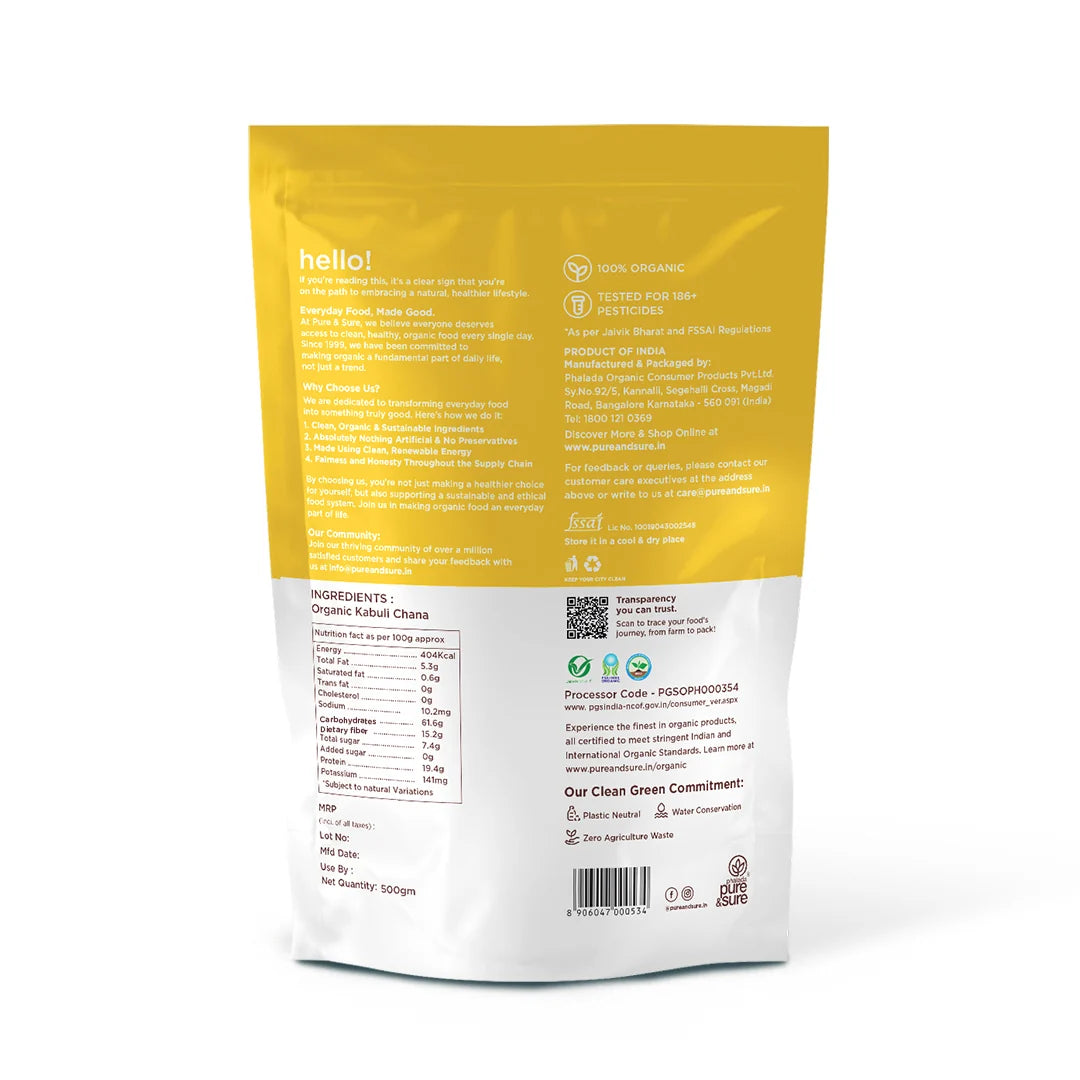
- 15.2 g of fibre per 100 g.
Ingredients
Organic kabuli chana (100%)
Single ingredientWhole dried white chickpeas with nothing added, coated or blended in.
No polish
Not usedPolishing with oil or water is used to give older stock a fresh shine.
No preservative
Not usedDried pulses need none.
Nutrition factsPer 100g
- Energy kcal
- 404 kcal
- Protein g
- 19.4 g
- Carbohydrate g
- 61.6 g
- Total sugars g
- 7.4 g
- Added sugars g
- 0 g
- Dietary fibre g
- 15.2 g
- Total fat g
- 5.3 g
- Saturated fat g
- 0.6 g
- Trans fat g
- 0 g
- Cholesterol mg
- 0 mg
- Salt g
- 0.03 g
Pure & Sure Kabuli Chana versus other kabuli chanas
| What to compare | Purepicked | Regular kabuli chana |
|---|---|---|
| Ingredient list | Chickpeas only | Also chickpeas only; what differs is the treatment, not the ingredients |
| Polishing | Unpolished | Often polished for shine |
| Appearance | Matte, slightly uneven | Uniform and bright white — sulphur is used in the trade to whiten pale chickpeas, and never appears on a label |
| Farming | Certified organic, PGS processor code on pack | Conventional, with no certification code to check |
Is It For You?
Good for
Chole, curries and everyday gravies
Hummus and dips
Roasted chana snacks and chaats
Salads, grain bowls and meal prep
High protein vegetarian diet
Avoid if
Anyone who finds whole legumes difficult to digest
How to use
Soak eight to twelve hours in plenty of water; the beans roughly double
Drain, discard the soaking water and cook in fresh water
Pressure-cook twenty to twenty-five minutes after soaking for chole
Add a pinch of baking soda for hummus-soft chickpeas, and keep the cooking liquid as aquafaba
What to look for in Kabuli Chana?
Polished pulses are buffed with water, oil, talc or soapstone purely for shelf appeal. It strips the outer layer and can leave residue behind. Unpolished dal looks duller, and that is the point.
Uniform colour and high gloss are warning signs in dal, not quality markers.
Metanil yellow is a banned dye used to brighten yellow dals. Rub a few grains between wet palms: dye lifts onto skin and polish leaves a slick. Neither should happen.
Organic certification covers how it was farmed, not whether it was adulterated. They are two different tests.