


Why we picked it
-
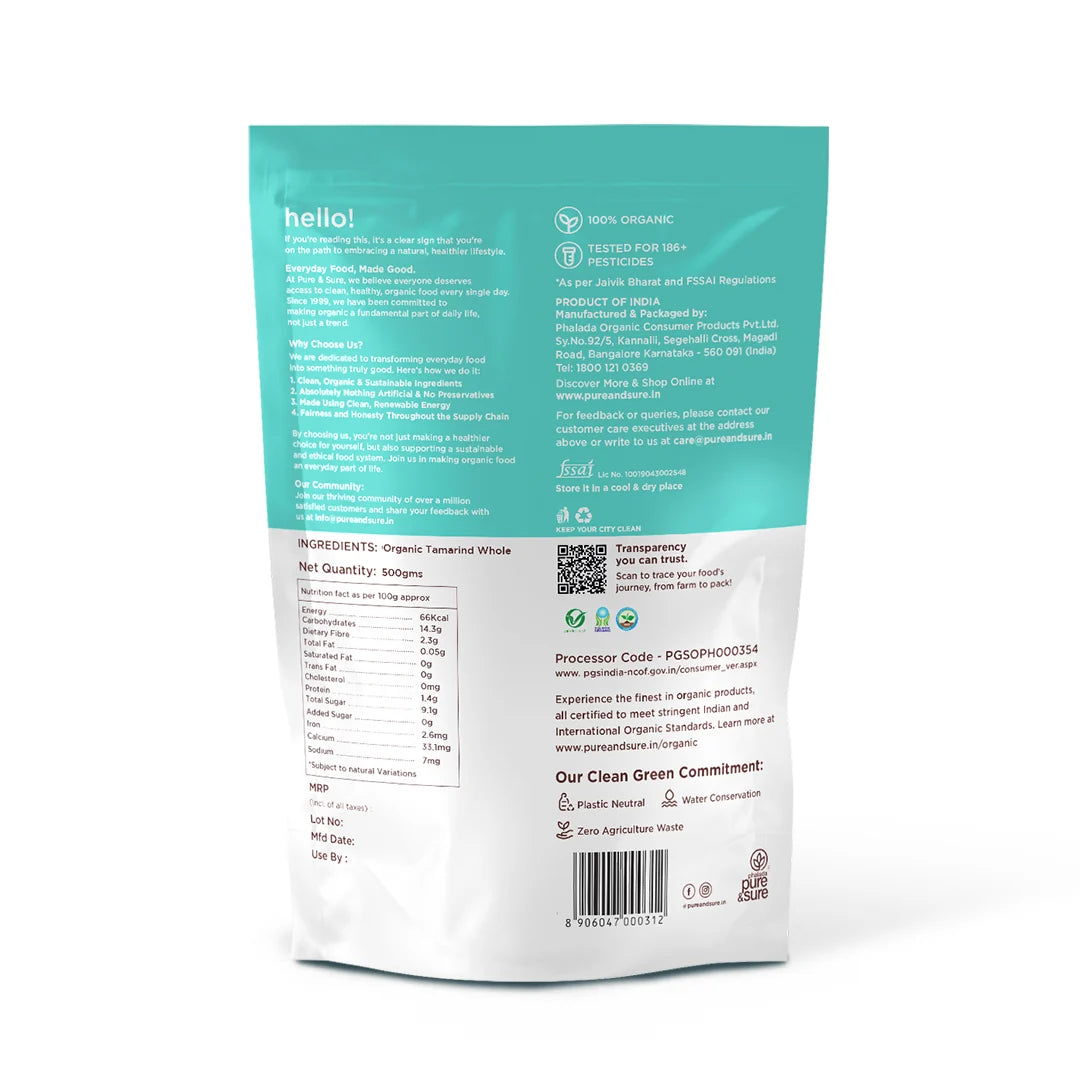
 100% single-ingredient organic tamarind.
-
 No sulphur dioxide, which is the standard preservative in the category.
-
 Natural red-brown that darkens with age — a block that stays bright red has usually had help.


What to look for in Tamarind?
What to look for in Tamarind?
- 01Read the ingredient list. Tamarind should be one ingredient, but salt and sulphur-based preservatives are both common and both have to be declared.
- 02Darkening is normal. Untreated tamarind goes from red-brown towards black as it ages, and a block that stays bright red has usually had help.
- 03Check whether the pack says whole, deseeded or paste. Whole is cheapest by weight and most wasteful by volume, since seeds and fibre come with it.
- 04Paste and concentrate are convenient but frequently carry preservative and sometimes added sugar.
What's inside
Tamarind as it comes, with nothing added. Whole means the pods' pulp with seeds and fibre still in it, not deseeded pulp or paste.
Commercial tamarind is routinely treated with sulphur dioxide or a permitted preservative to hold its colour and stop it darkening.
Salt is commonly added to tamarind blocks as a cheap preservative and to add weight.
Tamarind naturally darkens from red-brown to near-black as it ages, and colour is sometimes used to disguise that.
Pure & Sure Imli vs other tamarinds
| What to compare | Purepicked | Regular tamarind |
|---|---|---|
| Ingredient list | Tamarind only | Often salt or preservative added |
| Preservative | None | Sulphur dioxide commonly used |
| Form | Whole, seeds and fibre in | Deseeded pulp or concentrated paste |
| Colour | Natural red-brown, darkens with age | Sometimes helped along |
| Farming | Certified organic, PGS processor code | Conventional, with no residue data published |
Nutrition facts · per 100 g
- Energy
- 66 kcal
- Protein
- 1.4 g
- Carbohydrate
- 14.3 g
- Total sugars
- 9.1 g
- Added sugars
- 0 g
- Dietary fibre
- 2.3 g
- Total fat
- 0.05 g
- Saturated fat
- 0 g
- Trans fat
- 0 g
- Cholesterol
- 0 mg
- Salt
- 0.02 g
How to use it
- Soak a lemon-sized lump in a cup of warm water for fifteen to twenty minutes
- Squeeze the pulp out with your fingers, then strain off the seeds and fibre
- Use the extract in sambar, rasam and gravies; adjust to taste, since sourness varies batch to batch
- For chutneys, boil the strained pulp down with jaggery and spices
Is it for you?
Good for
Sambar, rasam and South Indian gravies
Chutneys, chaat and imli sauces, marinades and sour curries
Pulihora, puliyogare and tamarind rice
Avoid if
Cooks who want ready-to-use paste — this is whole tamarind with seeds and fibre, and needs soaking and straining
Anyone expecting a bright red-brown block; untreated tamarind darkens with age rather than being held with sulphur
Buyers who want a long-life pantry item that stays soft — without preservative it firms up over time
Product details
- Sold by
- Purepicked
- Brand
- Pure & Sure
- Net quantity
- 500 g
- Type
- Whole Spices
Also on the label
Questions people ask
Why is my tamarind turning darker?
There is no preservative in it. Untreated tamarind naturally darkens from red-brown towards near-black with age.
How do I make tamarind extract?
Soak a lemon-sized lump in a cup of warm water for 15 to 20 minutes. Squeeze out the pulp with your fingers, then strain off the seeds and fibre.
Is it ready-to-use paste?
No. It is whole tamarind with seeds and fibre still in, so it needs soaking and straining.
Why does the sourness vary?
Sourness varies batch to batch, so adjust to taste in sambar, rasam and gravies.
Why has it gone firm?
Without preservative or salt, whole tamarind firms up over time. You soak it in warm water before use anyway, which is how the pulp comes out.
Still unsure? Ask us on WhatsApp