


Why we picked it
-
 Milled specifically for idli and dosa batter rather than sold as general-purpose rice.
-
 Not chemically polished or bleached, so the grain keeps the surface starch that gives batter its body and lift.
-
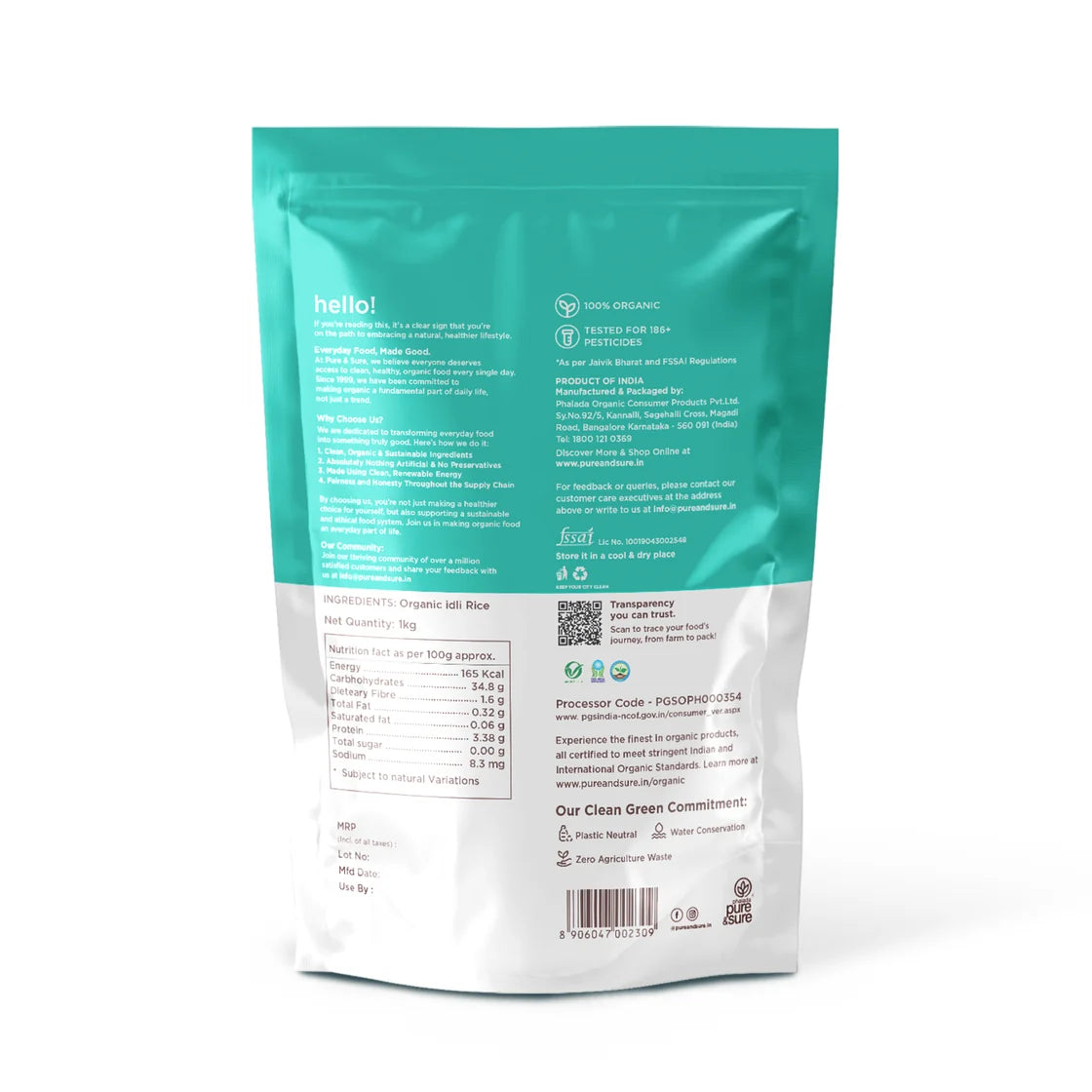
 Steam-sterilised rather than chemically treated, with the PGS processor code on the pack.


What to look for in Idli Rice?
What to look for in Idli Rice?
- 01Polishing strips the bran layer, which carries most of the fibre and minerals. More polish means whiter rice and less of what was in the grain.
- 02Artificial shine comes from oil or talc buffing. Genuine unpolished and semi-polished rice looks matte and slightly uneven.
- 03The ingredient list should read as one variety. Blending cheaper rice into a named variety is legal and common.
- 04Older rice cooks firmer and separates better. Ask about milling date, not just the packing date.
What's inside
Parboiled short-grain rice, milled without chemical polishing or bleaching; no preservatives or anti-caking agents declared.
Pure & Sure Idli Rice vs other idli rices
| What to compare | Purepicked | Regular idli rice |
|---|---|---|
| Ingredient list | Organic idli rice only | Usually rice only, but polishing and bleaching agents may be used in processing |
| Polishing | Not chemically polished or bleached | Commonly polished for whiter, glossier grain |
| Farming inputs | Certified organic, tested against 186+ pesticides | Conventionally farmed unless stated otherwise |
| Sterilisation | Steam sterilisation, no chemical treatment | Method usually not declared |
| Traceability | Processor code PGSOPH000354 on the pack | Source and processor usually not declared |
Nutrition facts · per 100 g
- Energy
- 165 kcal
- Protein
- 3.38 g
- Carbohydrate
- 34.8 g
- Total sugars
- 0.00 g
- Added sugars
- Not declared
- Dietary fibre
- 1.6 g
- Total fat
- 0.32 g
- Saturated fat
- 0.06 g
- Trans fat
- Not declared
- Cholesterol
- Not declared
- Salt
- 0.02 g
How to use it
- For idli batter: soak 3 parts rice and 1 part urad dal separately for 4-6 hours, grind, combine and ferment 8-12 hours
- For dosa: use the same batter, thinned with water, after fermentation
- Rinse the rice twice before soaking
- Store in a cool, dry place in an airtight container once opened
Is it for you?
Good for
Idli and dosa batter ground at home
Vegetarian and vegan households
Gluten-free diets
Avoid if
Low-carbohydrate or ketogenic diets
Biryani, pulao or any dish needing long-grain rice
Anyone advised a specific low-GI rice for blood sugar management
Product details
- Sold by
- Purepicked
- Brand
- Pure & Sure
- Net quantity
- 1 kg
- Type
- Rice
Also on the label
Questions people ask
How do I make idli batter with it?
Rinse the rice twice. Soak 3 parts rice and 1 part urad dal separately for 4 to 6 hours, grind, combine and ferment for 8 to 12 hours. Thin the same batter with water for dosa.
Why isn't it polished?
It isn't chemically polished or bleached, so the grain keeps its natural surface starch. That gives the batter its body and helps it ferment and rise into soft idlis.
Can I use it for biryani or pulao?
No. It is a short-grain parboiled rice milled for batter. Long-grain dishes need a different rice.
What's in the pack?
Only organic parboiled short-grain idli rice, steam-sterilised rather than chemically treated. No preservatives or anti-caking agents declared.
How should I store it?
In a cool, dry place, in an airtight container once opened.
Still unsure? Ask us on WhatsApp