


Why we picked it
-
 Sourced from certified organic farms in Guntur and dried to keep its heat and colour.
-
 Whole pods rather than powder, which is where dyes and fillers get in.
-
 Guntur is bought for heat rather than colour, so an unnaturally uniform red would be a warning, not a feature.


What to look for in Guntur Chilli?
What to look for in Guntur Chilli?
- 01Buy whole where you can. Whole spice you can inspect; powder is easy to pad out with starch, husk or chalk.
- 02Rub a pinch between wet palms. Colour that lifts onto skin means added dye. Metanil yellow, lead chromate and Sudan dyes are all documented in Indian spice.
- 03A single-ingredient list is the whole point. Anti-caking agents and 'permitted colour' both signal processing you do not need.
- 04Steam sterilisation is the clean way to reduce microbes. Irradiation and fumigation are not always declared.
- 05Guntur is bought for heat, not colour. Unnaturally uniform red suggests dye rather than a hotter chilli.
What's inside
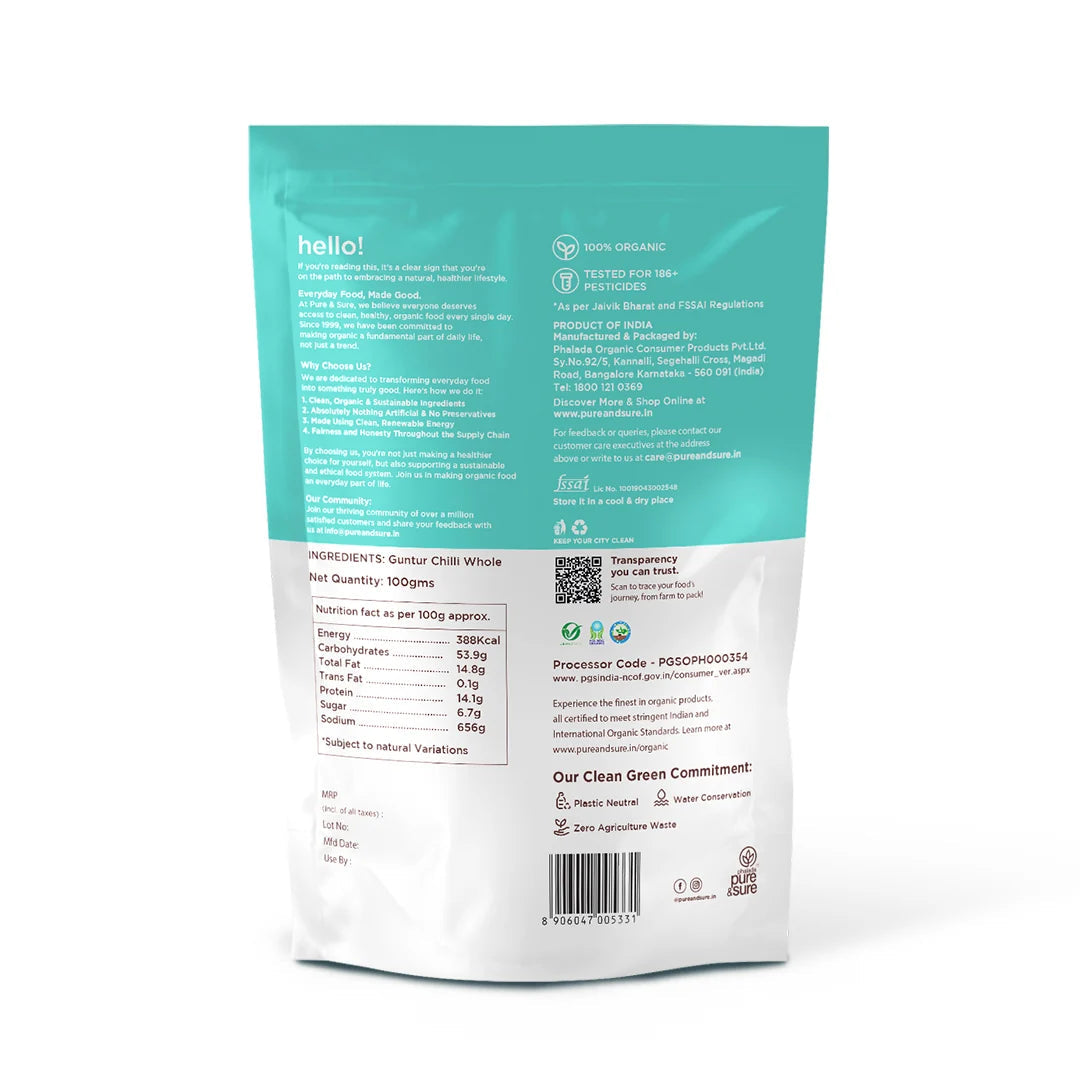
Whole dried chillies, nothing added.
Whole chillies are sometimes surface-treated with dye to look brighter than they are.
Whole chilli keeps its heat and aroma far longer than powder, and it is much harder to adulterate. Powder is where dyes and fillers get in.
Pure & Sure Sabut Guntur Mirch vs other guntur chillies
| What to compare | Purepicked | Regular Guntur chilli |
|---|---|---|
| Ingredient list | Chilli only | Same, though a dye or oil rub never appears on a label |
| Form | Whole dried pods | Often sold as powder, which is easier to adulterate |
| Colour | Natural deep red | Dye and oil rubs are documented in the trade |
| Heat | Guntur — the heat variety | Usually sold as generic chilli with no variety named |
| Farming | Certified organic, PGS processor code | Conventional, with no residue data published |
How to use it
- Break or snap pods into hot oil for tadka; remove the seeds first if you want less heat
- Soak in warm water twenty minutes before grinding into a wet masala paste
- Dry-roast lightly, then grind fresh for a chilli powder with far more aroma than a bought one
- Use whole in pickles and podis where the pod does the work slowly
Is it for you?
Good for
Andhra and Telangana cooking, where heat is the point
Grinding fresh into chilli powder at home
Tempering and tadka, broken into hot oil
Pickles, podis and spice blends
Avoid if
Anyone sensitive to heat — Guntur is one of the hottest chillies in everyday Indian cooking
Cooks who want colour rather than heat; Byadagi is the chilli for that
Buyers who want ready-ground chilli powder — these are whole pods
Product details
- Sold by
- Purepicked
- Brand
- Pure & Sure
- Net quantity
- 100 g
- Type
- Whole Spices
Also on the label
Questions people ask
How hot is Guntur chilli?
Very. Guntur is the heat variety Andhra cooking is built on, and one of the hottest chillies in everyday Indian cooking. For colour with mild heat, Byadagi is the one to pick.
How do I reduce the heat?
Remove the seeds before snapping the pods into hot oil for tadka.
Why buy whole pods instead of powder?
Whole pods hold their heat and aroma far longer than ground chilli, and they're much harder to adulterate, since dye and filler go into powder.
Can I make my own chilli powder?
Yes. Dry-roast the pods lightly, then grind fresh. For a wet masala, soak them in warm water for twenty minutes first.
What's in the pack?
Only whole dried Guntur chillies from certified organic farms. No added colour and no additives.
Still unsure? Ask us on WhatsApp