


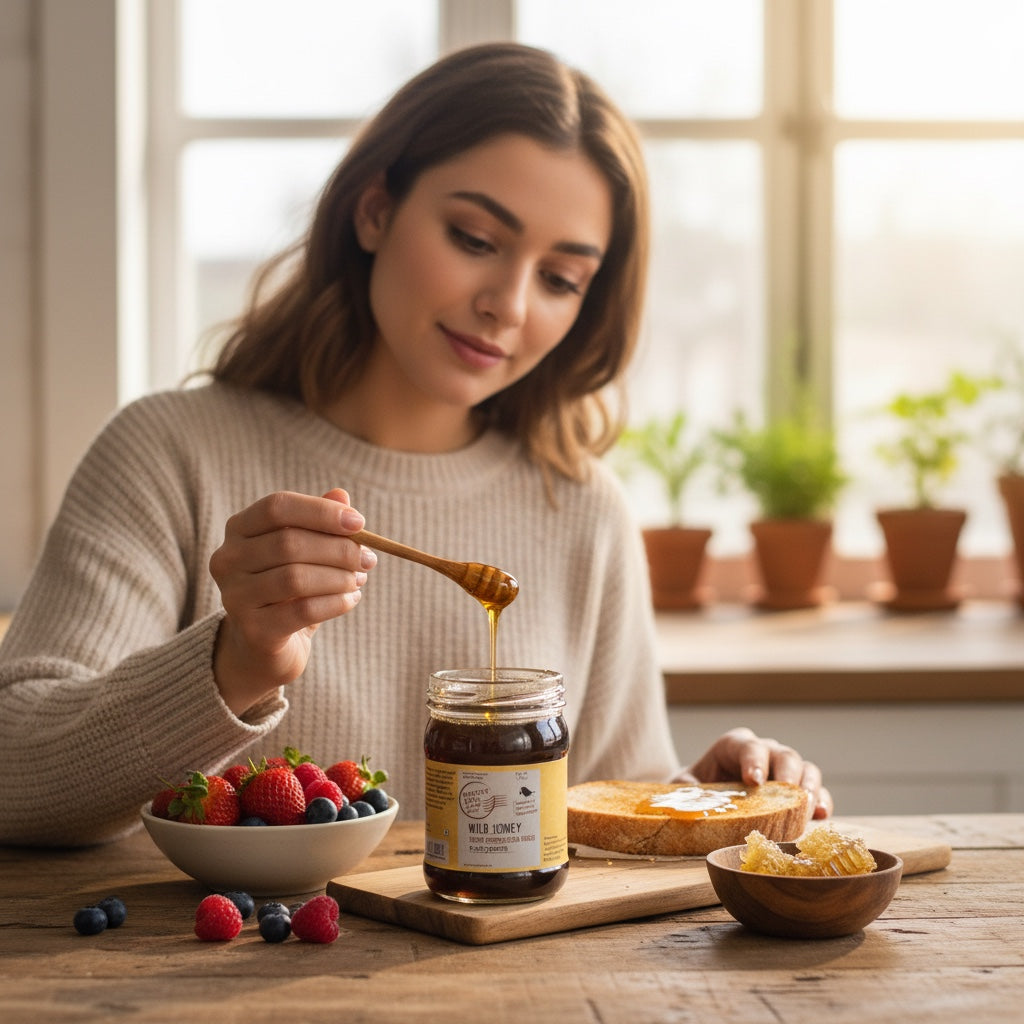
Why We Like It
- It's sourced from a named bee, a named forest, a named harvesting community.
Forest Post Wild Honey versus other honeys
| What to compare | Purepicked | Regular honey |
|---|---|---|
| Bee species | Stingless / dammer bee, named | Usually unstated, often Apis mellifera |
| Source | Wild cavities, named forest region | Apiary or blended, origin rarely given |
| Harvest | Forest-dwelling communities | Commercial apiaries |
| Taste | Tangy and acidic, thinner set | Uniformly sweet, thicker |
| Syrup testing | No published result | Rarely published |
Is It For You?
Good for
Taken by the spoon, where the tangy character is the point
Supporting forest-dweller harvested produce
Drizzling over curd, fruit or warm dishes
Anyone who wants a single-origin, single-species honey
Avoid if
Infants under 12 months
Anyone needing a lab-confirmed purity test on file before purchase
How to use
Use a dry spoon; moisture encourages fermentation, and stingless bee honey is already high in moisture
Taste it neat first — the acidity is the character and it is easily lost in cooking
Drizzle over curd, fruit or warm dishes rather than baking with it
If it thickens or crystallises, stand the jar in warm water; do not heat directly
What to look for in Wild Honey?
Check which bee. Apis dorsata rock bee honey, Apis cerana honey and stingless bee honey are three different products with different taste, texture and price.
Stingless bee honey is naturally thinner and more acidic. A runny, tangy honey is correct here, not a sign of dilution.
Crystallisation is normal in raw honey and a good sign. Warm the jar in water rather than heating it directly.