


Why we picked it
-
 One ingredient, sold whole, from a named forest and a named community.
-
 Buying pepper whole sidesteps the adulteration problem ground pepper has in India entirely.


What to look for in Black Pepper?
What to look for in Black Pepper?
- 01Buy whole, not ground. Papaya seed and spent husk are the usual fillers in ground pepper and neither is detectable once it is powder.
- 02A good peppercorn is heavy for its size and sinks in water. Light hollow corns are immature or already spent.
- 03Wrinkled skin is correct. A smooth glossy corn has usually been polished, which costs it oil.
- 04Pepper loses its volatile oil fast once ground, so grind only what you need.
This vs regular Black Pepper
| What to compare | Purepicked | Regular black pepper |
|---|---|---|
| Form sold | Whole peppercorns | Commonly sold pre-ground |
| Ingredient list | One ingredient | Ground pepper is widely cut with papaya seed or spent husk |
| Source | Forest-gathered in Kerala by Adivasi collectives | Plantation-grown, origin rarely stated |
| Drying | Sun-dried | Often mechanically dried |
| Published testing | No published assay | Rarely published |
How to use it
- Grind fresh at the table, or into the pan at the end of cooking rather than the start
- Crack coarsely for rasam, pepper chicken and kashaayam instead of powdering
- Toast lightly in a dry pan before grinding to lift the aroma
- Store whole in a closed jar away from heat — whole corns hold their oil for years
Is it for you?
Good for
Anyone who grinds their own pepper
Cooking where pepper is the heat rather than chilli
Supporting forest-gathered produce from Adivasi collectives
Avoid if
Anyone who wants ready-ground pepper
Anyone needing a lab-confirmed piperine or adulteration test on file before purchase
Product details
- Sold by
- Purepicked
- Brand
- Forest Post
- Net quantity
- 100 g
- Type
- Whole Spices
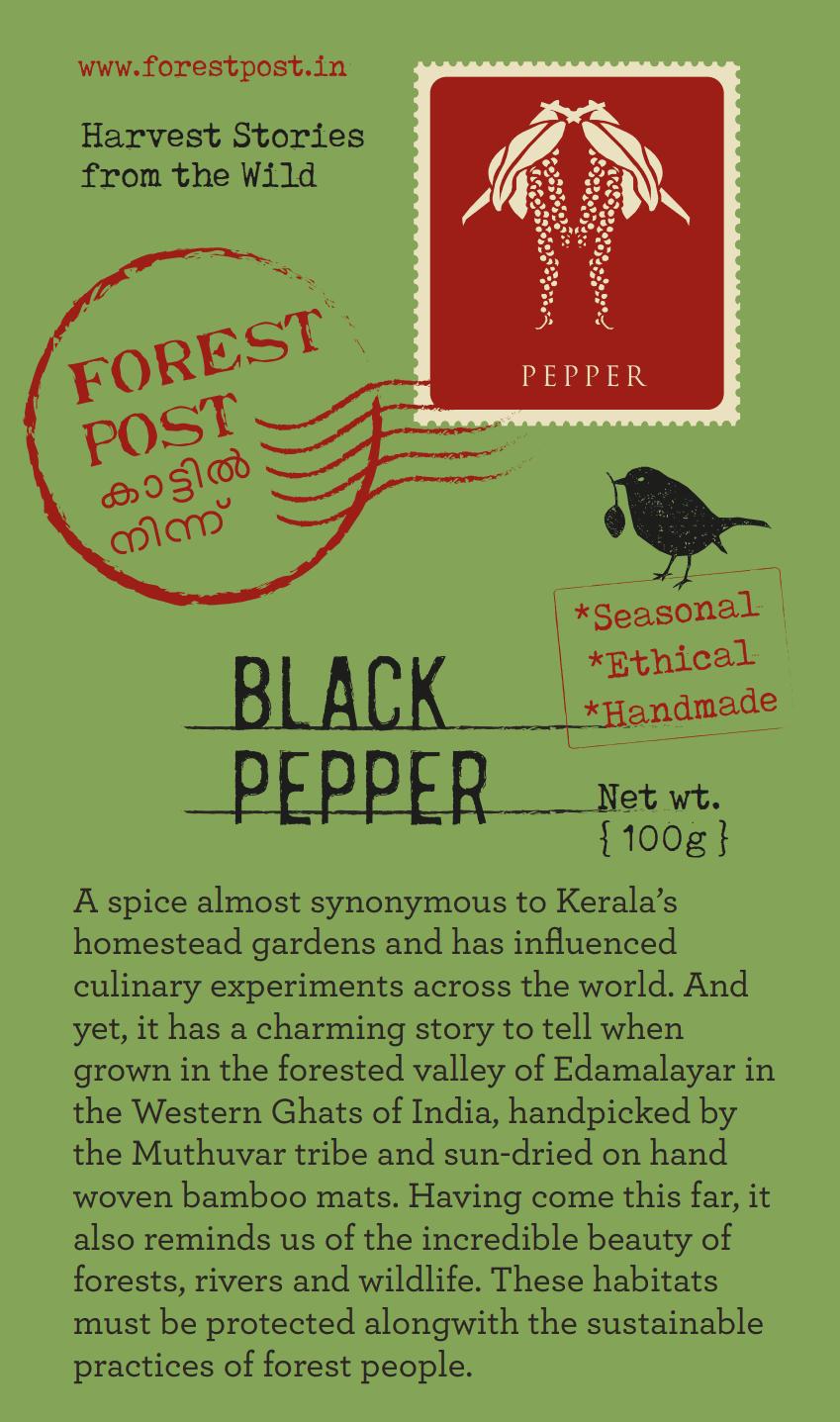
Also on the label
Questions people ask
Why buy whole peppercorns?
Ground pepper is often cut with papaya seed or spent husk, which can't be spotted once it is powder. A whole peppercorn can't hide either.
Where does it come from?
It is gathered by Adivasi collectives in Kerala, where pepper grows as a climber on forest trees rather than on a plantation trellis, and then sun-dried.
How do I get the most flavour?
Grind it fresh, ideally at the end of cooking. Toasting lightly in a dry pan before grinding lifts the aroma.
How should I store it?
Whole, in a closed jar away from heat. Pepper loses its oil fast once ground, so grind only what you need.
Is the harvest year given?
No. Harvest year isn't declared, and no piperine or adulteration test is published for this batch.
Still unsure? Ask us on WhatsApp