


Why we picked it
-
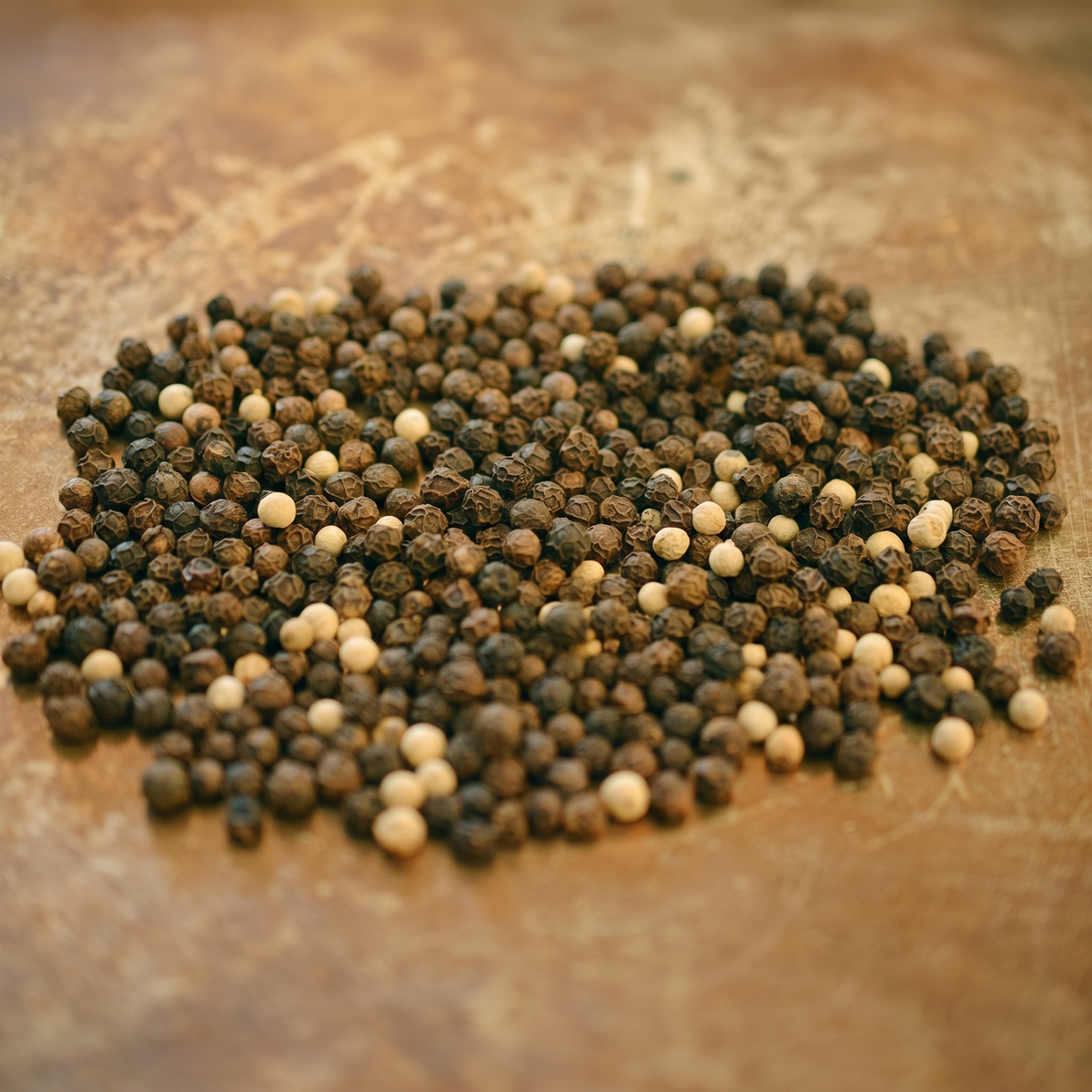
 Whole, single-origin and traceable — peppercorns you can see, from named Nilgiris farmers, with nothing added.
-
 Papaya seed is the classic pepper adulterant, and whole peppercorns are where you can actually spot it.
-
 Processed and packed by women of the region's producer co-operative rather than bulk-milled.


What to look for in Black Pepper?
What to look for in Black Pepper?
- 01Buy whole where you can. Whole spice you can inspect; powder is easy to pad out with starch, husk or chalk.
- 02Rub a pinch between wet palms. Colour that lifts onto skin means added dye. Metanil yellow, lead chromate and Sudan dyes are all documented in Indian spice.
- 03A single-ingredient list is the whole point. Anti-caking agents and 'permitted colour' both signal processing you do not need.
- 04Steam sterilisation is the clean way to reduce microbes. Irradiation and fumigation are not always declared.
- 05Papaya seed is the classic pepper adulterant. It is lighter than peppercorn and tends to float in water.
What's inside
Single-origin Nilgiris Biosphere Reserve, hand-harvested. No additives.
Aadhimalai Forest Kali Mirch vs other black peppercorns
| What to compare | Purepicked | Regular pepper |
|---|---|---|
| Form | Whole peppercorns | Often pre-ground, may be blended |
| Additives | None | Ground pepper may carry papaya-seed or filler adulteration |
| Source | Single co-op, Nilgiris | Blended from mixed origins in bulk trade |
| Processing | Cleaned and packed by the co-op | Bulk-milled |
| Traceability | Named biosphere and producers | Source rarely traceable past the trader |
How to use it
- Grind fresh over finished dishes
- Add whole to tempering or stocks
- Crush into marinades and rubs
Is it for you?
Good for
Whole-food cooking
Everyday seasoning
Avoid if
Anyone who wants ready-ground pepper — these are whole peppercorns and need a mill
Cooks after a mild seasoning; single-origin pepper is sharper than the pre-ground kind
Buyers expecting uniform, glossy black corns — hand-harvested pepper varies in size and shade
Product details
- Sold by
- Purepicked
- Brand
- Aadhimalai
- Net quantity
- 25 g, 50 g, 100 g, 250 g
- Type
- Whole Spices
Also on the label
Questions people ask
Are these whole peppercorns or ground pepper?
Whole peppercorns, so you will need a pepper mill or mortar. Nothing is added.
Why do the peppercorns vary in size and colour?
They are hand-harvested by indigenous farmers in the Nilgiris Biosphere Reserve, so size and shade vary. Do not expect uniform, glossy black corns.
Is it stronger than regular pepper?
Single-origin pepper is sharper than the pre-ground kind, so start with less if you prefer mild seasoning.
How do I use it?
Grind it fresh over finished dishes, add it whole to tempering or stocks, or crush it into marinades and rubs.
Is it certified organic?
It carries PGS certification, a recognised organic model for smallholder groups. PGS is peer-reviewed rather than third-party audited, so it is not the same as NPOP third-party certification.
Still unsure? Ask us on WhatsApp