


Why We Like It
- Five ingredients on the can, and no artificial flavours, colours or preservatives.
- Raw and unpasteurised, as the can says.
- 11 kcal and 2.5 g added sugar per 100 ml, a much lighter drink than a flavoured soda.
- Lychee with a lemon edge, which Assamé describes as lightly tart and subtly sweet.
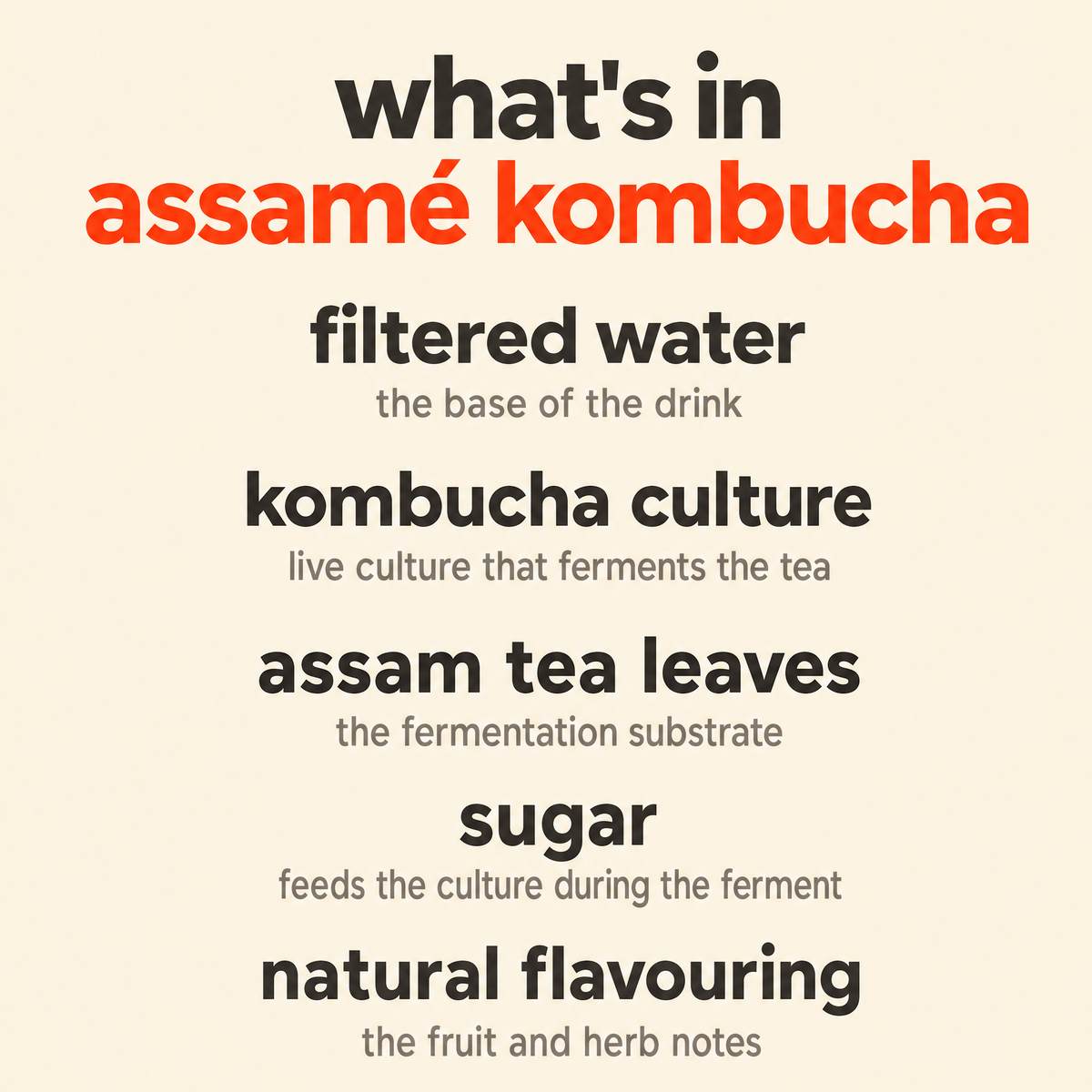
Ingredients
Filtered Water
NoteBase of the drink.
Kombucha Culture
NoteThe culture of bacteria and yeast that ferments the tea.
Assam Tea Leaves
NoteWhat the culture ferments, and the source of the trace caffeine.
Sugar
NoteFeeds the ferment; 2.5 g of added sugar per 100 ml remains in the finished drink.
Natural Flavouring Substances and Herb Extracts
NoteWhere the lychee and lemon notes come from. The label does not name the fruit or herbs.
Nutrition factsPer 100g
- Energy kcal
- 11 kcal
- Protein g
- 0.1 g
- Carbohydrate g
- 2.7 g
- Added sugars g
- 2.5 g
- Total fat g
- 0 g
- Sodium mg
- 5 mg
Assamé Kombucha versus other kombuchas
| What to compare | Purepicked | Regular kombucha |
|---|---|---|
| Pasteurisation | Raw and unpasteurised, per the can | Many brands pasteurise after fermenting |
| Added sugar | 2.5 g per 100 ml | Varies with the length of the ferment and any sugar added after it |
| Flavouring | Natural flavouring substances and herb extracts; no artificial flavours, colours or preservatives | May include artificial flavours, colours or preservatives |
| Calories | 11 kcal per 100 ml | Varies with how much sugar is left after fermentation |
Is It For You?
Good for
Following a low-sugar or low-calorie diet
Avoiding artificial flavours, colours or preservatives
Fans of fermented tea or kombucha
Anyone who likes a bright, citrusy drink
Avoid if
Strictly avoiding all trace caffeine
Avoiding any trace alcohol from fermentation
Looking for a completely sugar-free drink
How to use
Serve chilled, straight from the can
Keep refrigerated, as the can says
Drink soon after opening for the best fizz
What to look for in Kombucha?
Check whether it's raw and unpasteurised. Many brands heat-treat kombucha after fermenting.
Look at added sugar per 100 ml. Kombucha should read closer to tea than soda.
Scan the ingredient list for artificial flavours, colours or preservatives.
Check the fermentation time, since longer ferments generally mean fewer residual sugars.
Check for trace alcohol content if you're avoiding alcohol entirely, since fermentation can produce trace ethanol.