



Why We Like It
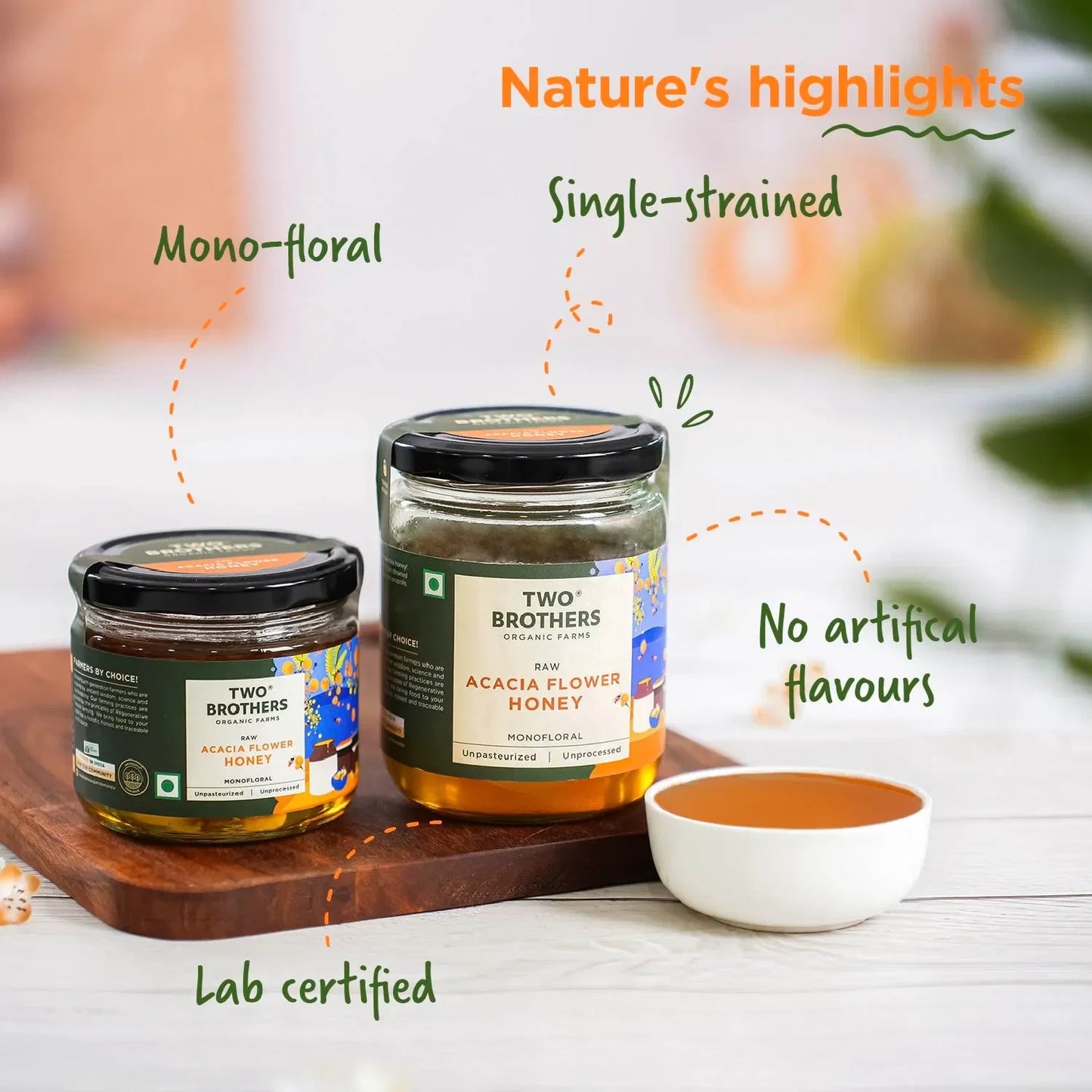
- One ingredient, acacia honey, and nothing else in the jar.
- Raw and single-strained rather than heated and ultra-filtered, so the pollen and enzymes stay in.
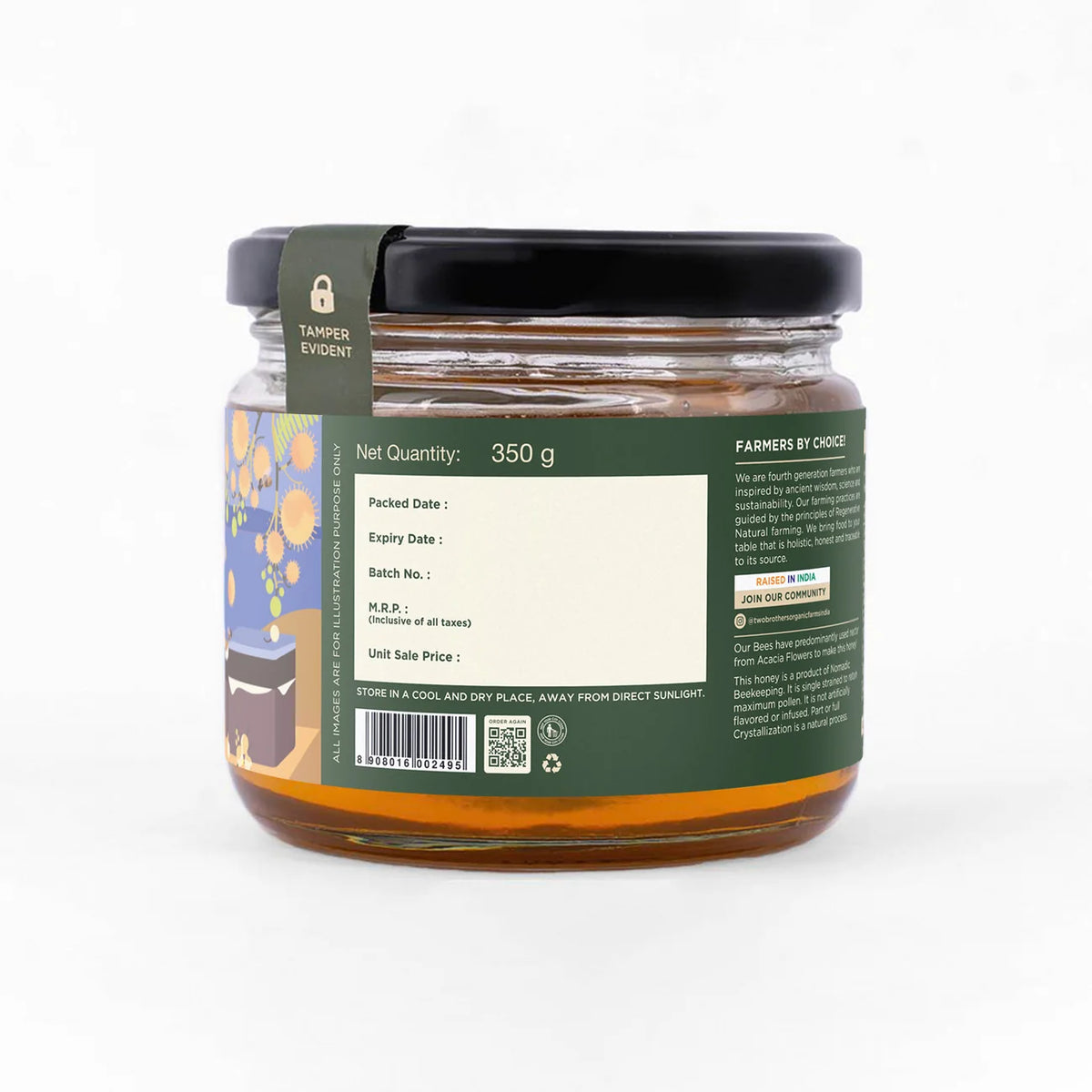
- Lab-tested at under 1 g added sugar per 100 g and 10.26% moisture, which is low enough that it will not ferment.
- A single floral source rather than a blend, so the light colour and mild flavour are consistent.
Ingredients
Raw Acacia Honey
Sole ingredientSingle-strained, unheated, acacia as the floral source; lab-tested added sugar under 1 g per 100 g.
Nutrition factsPer 100g
- Energy kcal
- 312.4 kcal
- Protein g
- 0.53 g
- Carbohydrate g
- 77.57 g
- Total sugars g
- 77.38 g
- Added sugars g
- 0 g
- Dietary fibre g
- 0 g
- Total fat g
- 0 g
- Saturated fat g
- 0 g
- Trans fat g
- 0 g
- Cholesterol mg
- 0 mg
- Salt g
- <0.01 g
Two Brothers Acacia Honey versus other honeys
| What to compare | Purepicked | Regular/commercial honey |
|---|---|---|
| Ingredient list | 100% Acacia Honey, single ingredient | May be blended with cheaper multi-floral honey |
| Processing | Raw, unheated, single-strained | Often heat-treated and ultra-filtered |
| Additives | None | Flavour or colour added in some honeys |
| Lab testing | Moisture 10.26% and added sugar under 1 g per 100 g, lab-tested | Not routinely tested |
| Floral source | Mono-floral, acacia | Usually a multi-floral blend |
Is It For You?
Good for
People wanting raw, unfiltered honey with natural pollen and enzymes intact
Buyers avoiding heat-processed, ultra-filtered commercial honey
Those who prefer a light, mild, mono-floral honey
Gifting a traceable, single-source honey
Avoid if
Vegans (honey is an animal product)
Infants under 12 months — never give honey, botulism risk
Diabetics treating it as sugar-free (honey is ~90% carbohydrate)
Anyone wanting a honey that never crystallises (raw honey naturally sets over time)
How to use
Stir well before use; crystallisation is natural
Sweeten tea or coffee where a mild flavour is preferred
Use in baking, dressings or marinades
Mix with warm water for a sore throat or cough
What to look for in Honey?
Sugar syrup adulteration is the central problem in honey. Rice and corn syrup are not detectable by taste, and the water-drop test does not work.
Moisture matters. Above roughly 20% honey ferments. Genuine low-moisture honey is thick and slow to pour.
Crystallisation is normal and varies by floral source. It is not a sign of sugar and not a sign of spoilage.
Raw, unfiltered honey keeps its pollen. Heavy filtering and heating make honey clear and pretty while stripping that away.
A C4 sugar isotope test is the check that catches syrup adulteration. An organic certificate covers the beekeeping, not the syrup.